This post was originally published on here
Arkansas researcher makes Forbes 30 under 30 in science
FAYETTEVILLE, Ark. (KNWA/KFTA) — A University of Arkansas biomedical engineering researcher has been named to the Forbes 30 Under 30 Science list for 2026.
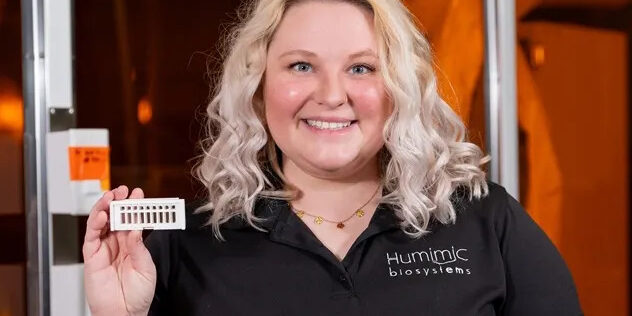
Lexi Applequist, a Ph.D. researcher at the University of Arkansas and cofounder and CEO of Humimic Biosystems, was recognized in Forbes in Dec. 2025 for her work “creating better organ-on-chip devices, which give researchers and drug developers a faster, more accurate way to predict how real human bodies will respond to new therapies without animal testing.”
Applequist conducts research in the university’s Mechanobiology and Soft Materials Laboratory, where her work focuses on developing human-relevant alternatives to animal testing. Her research centers on organ-on-chip technologies, which are designed to better predict how drugs will interact with human tissues before they reach clinical trials, according to a news release.
Advertisement
Advertisement
“Being named to Forbes 30 Under 30 is incredibly meaningful not only as a personal milestone, but because it represents recognition beyond the traditional academic and scientific community,” Applequist said. “It reflects the importance of scientific communication and the ability to translate research into real-world impact.”
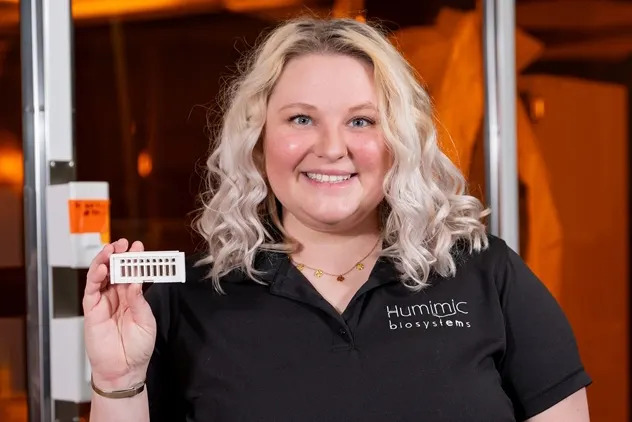
Lexi Applequist (COURTESY: University of Arkansas)
Her latest research tested a new trademarked material called pz-PDMS. This material can respond to tiny electrical changes, which lets scientists measure how strongly heart cells contract, without needing microscopes or cameras. The goal, according to the University of Arkansas, is to make it easier to see how human heart tissue reacts to different drugs, helping researchers better predict whether medications will be safe and effective before they reach patients.
Razorbacks ice hockey team wins inaugural Frozen Showcase Championship
Applequist began her doctoral studies in 2022 and later cofounded Humimic Biosystems LLC with her research advisor, Kartik Balachandran, interim associate dean for research and professor of biomedical engineering in the College of Engineering. According to the university, the company has secured $95,000 in non-dilutive funding, and Applequist has raised more than $500,000 to support both commercialization and ongoing research.
Advertisement
Advertisement
“Lexi’s ability to bridge rigorous science with commercial viability is rare at any career stage, let alone as a Ph.D. student,” Balachandran said in a news release. “She’s been instrumental in securing our funding and shaping Humimic’s vision from day one.”
Humimic Biosystems’ platforms include the trademarked CoCo Chip, which models heart muscle, and the NICE Chip, which models skeletal muscle. The company has also developed additional organ models nearing commercialization, including DynaMOC for heart valves, AirLOC for nasal airways and the MINT Chip for blood-brain barrier research.
The company said it estimates the technology could shorten drug development timelines and reduce development costs while decreasing the use of animals in testing.
Applequist has also participated in international entrepreneurship competitions and research programs, including the Bangkok Business Challenge and the Startup World Cup Grand Finale. She has presented research in multiple countries and completed a research fellowship with a medical technology startup in Bengaluru, India.
Advertisement
Advertisement
She has received fellowships from multiple institutions, including those at the University of Arkansas and the National Science Foundation.
Copyright 2026 Nexstar Media, Inc. All rights reserved. This material may not be published, broadcast, rewritten, or redistributed.
For the latest news, weather, sports, and streaming video, head to KNWA FOX24.