This post was originally published on here
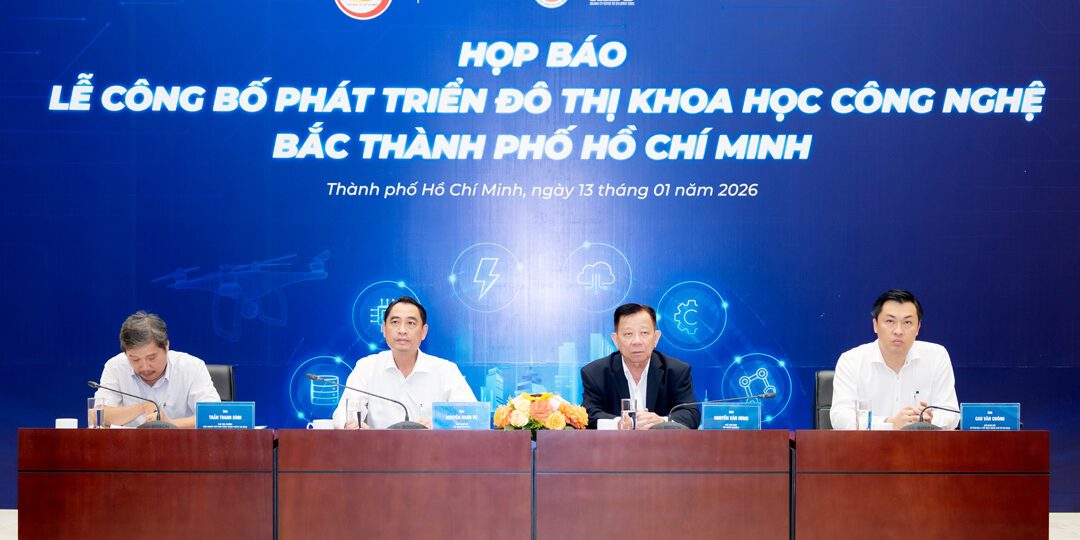
HCMC – HCMC on January 13 announced a plan to develop a Science and Technology urban area in the northern part of the city, an integrated urban model combining research, training and high-tech production to create a new growth engine and attract high-value investment.
The plan was released at a press conference jointly held by the HCMC People’s Committee, the Department of Science and Technology, the HCMC Institute for Development Studies and partners, according to city authorities.
The northern science and technology hub is positioned as the science and technology nucleus for the city’s northern and northwestern areas. It is designed to directly connect with next-generation high-tech industrial zones such as Binh Duong Riverside, Lai Hung, Cay Truong and VSIP III.
The model integrates R&D, human resource training, technology testing and production within the same space. City officials said this aims to shorten the value chain from research to commercialization, a limitation seen in many earlier high-tech parks.
Under the plan, development is structured around three components. The core innovation zone includes about 103 hectares for a science and technology center and around 220 hectares for R&D facilities linked to pilot production. A high-tech manufacturing belt will be built on existing industrial parks, developed toward smart and eco-industrial models. A multi-layered system covering transport, logistics and digital infrastructure will ensure connectivity with economic centers across the expanded HCMC region.
Several projects have been identified as early anchors, including the Saigon Innovation Campus of about 100 hectares, the 15-hectare Binh Duong Concentrated Digital Technology Park, and the former Binh Duong provincial administrative center, which is planned to be converted into a science and technology building.
Becamex Group has been proposed as the strategic investor, working with international partners such as Sembcorp, Tokyu Group and Warburg Pincus, according to the project proposal.
The ecosystem will be supported by research and academic institutions including A*STAR ARTC of Singapore, Germany’s Fraunhofer ENAS, the National University of Singapore, major technology corporations and domestic universities.
The plan will apply special mechanisms under National Assembly Resolution 98/2023/QH15 and Resolution 260/2025/QH15, including a one-stop management model and controlled sandbox mechanisms to pilot new technologies in areas such as artificial intelligence, semiconductors and digital technology.
City authorities said the northern science and technology city is expected to contribute to GRDP growth, attract high-quality foreign direct investment, reduce population pressure in central areas and create a green urban space for skilled workers and technology experts.