This post was originally published on here
Once part of the vast Filchner Ice Shelf, iceberg A-23A spent decades lodged in Antarctic waters, drifting neither far nor fast. It was quiet. Immobile. Barely discussed outside scientific circles. Yet at over 4,000 square kilometers when it calved in 1986, it was already the size of a small country.
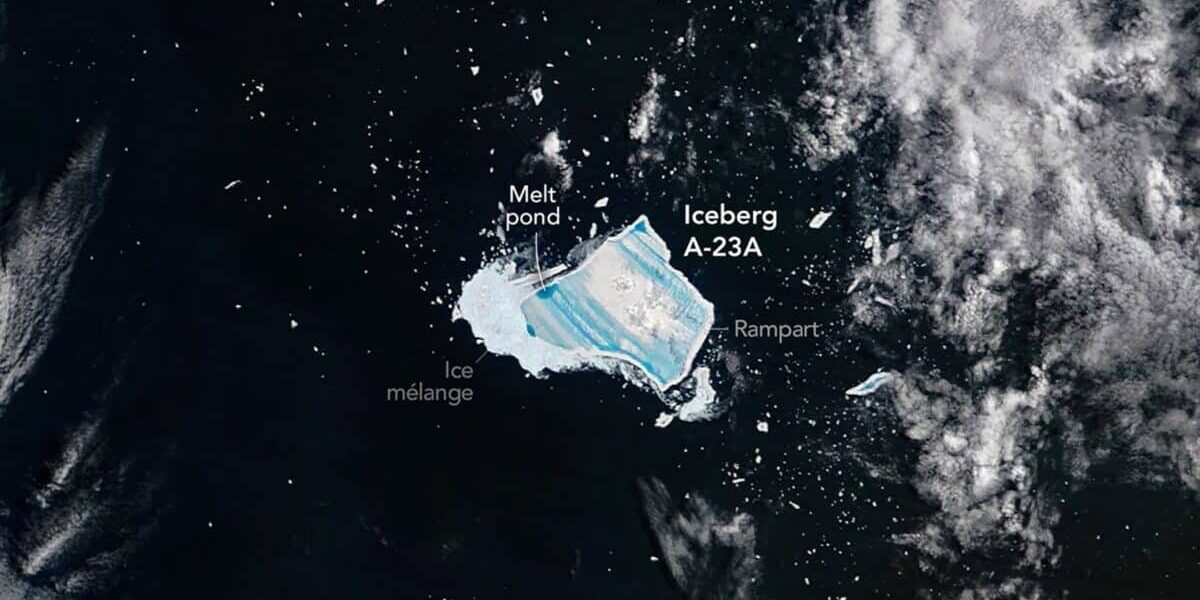
That silence ended abruptly in late December 2025. A satellite image, followed by a photograph from the International Space Station, revealed a striking and sudden change. The surface of A-23A had turned an intense blue, replacing its long-standing white exterior. The change was visual, unmistakable, and deeply significant.
This transformation did not occur in isolation. Over the past several years, A-23A had begun moving northward into the South Atlantic, entering warmer waters after being grounded for more than 30 years. It had already lost considerable mass. The blue colour was not a surface stain but a symptom.
Scientists tracking the iceberg now believe it may be nearing the end of its long trajectory. What was once a stable relic of Antarctic ice is showing signs of advanced and irreversible deterioration.
Accelerated Surface Melt Identified
On 26 December 2025, NASA’s Moderate Resolution Imaging Spectroradiometer (MODIS) captured imagery showing extensive meltwater ponds spread across A-23A’s surface. A second image, taken from the International Space Station the following day, confirmed the expansion of these features. Together, they mark the clearest visual evidence yet that the iceberg is entering a rapid disintegration phase.
Researchers examining the imagery described concentrated “blue-mush” areas as indicators of ongoing melt-driven collapse. These zones form when meltwater accumulates in surface crevasses, forcing them wider and deeper under its weight.
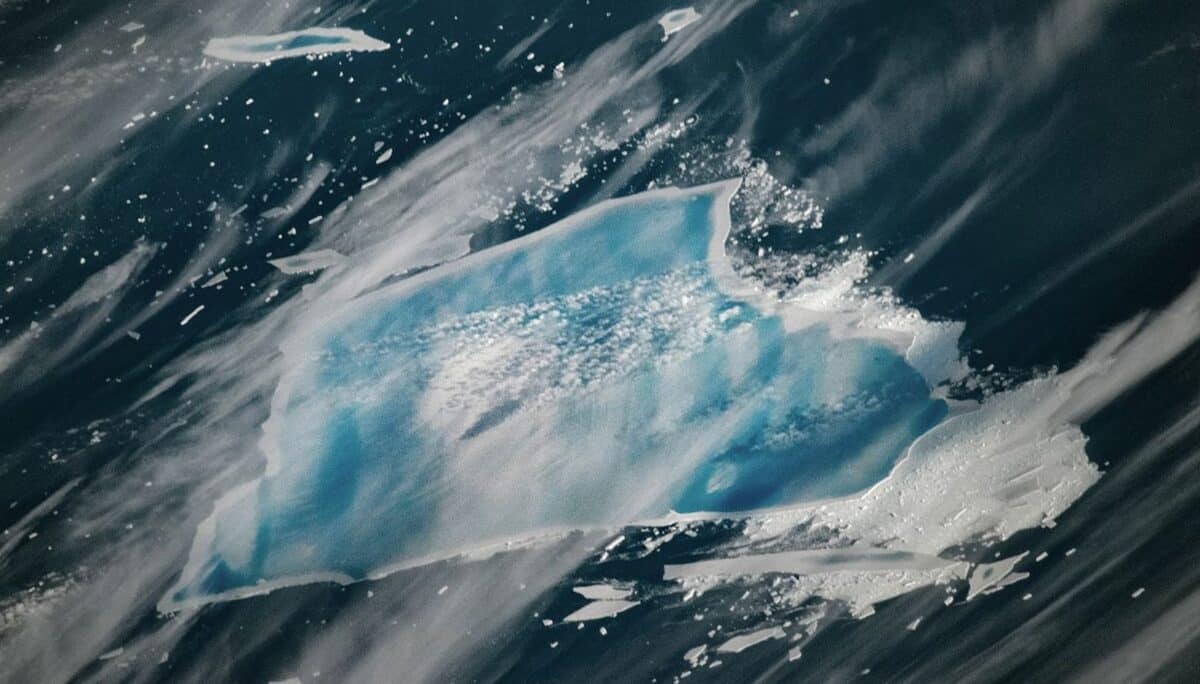
Along the iceberg’s edges, a thin white boundary was observed retaining some of the water. This structure, referred to by scientists as a “rampart-moat” formation, is created by the upward flexing of ice as edge melting progresses near the waterline.
NASA’s Earth Observatory reported a white area on the western side of the iceberg. Researchers interpret this as a potential blowout, in which the pressure of pooled meltwater forces a breach through the ice, releasing water tens of metres downward into the ocean and forming a freshwater discharge plume.
Structural Patterns and Historical Imprint
Striking surface features are guiding this melt. A-23A displays visible linear striations that were formed hundreds of years ago, when the ice was still embedded in the Antarctic continent. These markings, created as the glacier moved across underlying rock, continue to influence how meltwater travels and pools today.
According to scientists at the National Snow and Ice Data Center (NSIDC), these striations align with the historic flow direction of the ice. They now act as subtle ridges and troughs on the iceberg’s surface, directing runoff even after extensive melting and snowfall over the decades.
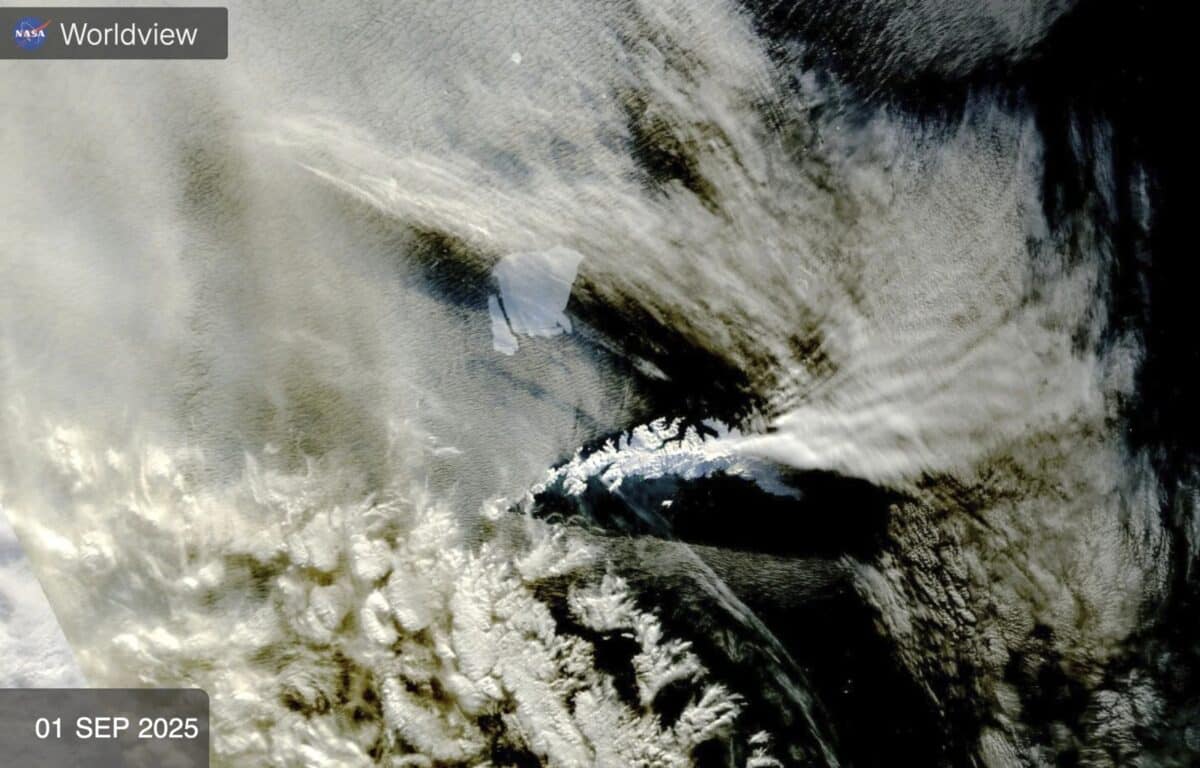
This persistence of internal structure, combined with surface melt, is accelerating the iceberg’s instability. Researchers monitoring its condition expect further fragmentation as temperatures remain high through the austral summer.
Ongoing Disintegration and Geographic Drift
Between July and September 2025, several large segments calved from A-23A as it moved into warmer waters near South Georgia Island. By early January 2026, its surface area had shrunk to 1,182 square kilometers, according to estimates from the U.S. National Ice Center.
Current ocean conditions are not favourable to ice preservation. Sea surface temperatures in the region are close to 3 degrees Celsius. Along with increased sunlight and clearer skies during the Southern Hemisphere summer, this environment is consistent with rapid ablation and internal weakening.
Ted Scambos, senior research scientist at the University of Colorado Boulder, stated in NASA’s official report that the visible blue melt zones likely reflect “ongoing disintegration events.” Though he did not estimate a precise timeline, he noted that A-23A may not survive the summer season intact.
What A-23A Reveals About the Future of Polar Ice
The projected collapse of A-23A comes at a time when several other Antarctic megabergs, such as A-81, B22A and D15A, remain near the Antarctic coastline. Each has a surface area exceeding 1,500 square kilometers. Though stable for now, they are under close observation.
The long and complex journey of A-23A has already contributed significantly to scientific understanding of iceberg mechanics, particularly for large tabular formations. Satellite platforms and observational campaigns by agencies including NASA Earth Science and the British Antarctic Survey have documented its movement and disintegration since its release from the Filchner Ice Shelf. The British Antarctic Survey’s analysis of its 2023 grounding near South Georgia Island offered new insight into iceberg–seabed interactions.
Still, key questions remain open. The total freshwater volume released during A-23A’s melt events has not been quantified. Nor is it clear how this discharge may affect nearby marine ecosystems or influence local ocean circulation in the short term. Further satellite analysis is expected to continue in the coming weeks as researchers monitor the final stages of the iceberg’s drift.