This post was originally published on here
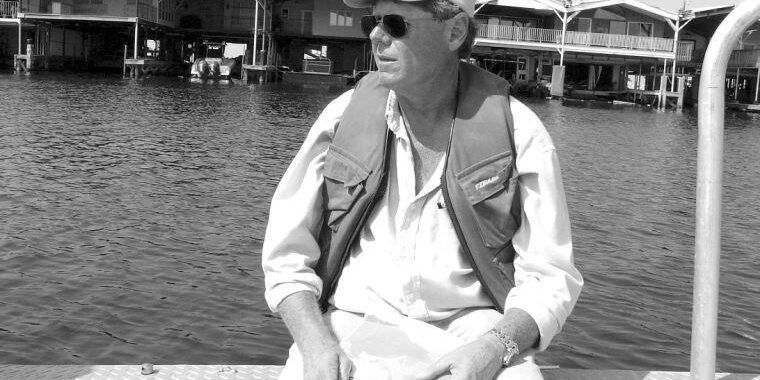
On an unusually cold morning in September, tucked away in the outside courtyard of Highland Coffees, Ivor van Heerden recounted his experience working as a scientist in the lead-up to hurricane Katrina.
Van Heerden was the main scientist who ran storm models and suggested what the city of New Orleans would need to do to survive a Katrina caliber catastrophe. What followed was the story of a man begging for help that never came.
Restoring the coast
A native of South Africa, van Heerden dedicated his life to advocating for the protection of the coastal wetlands and educating the public about the consequences of coastal land l.
Van Heerden graduated from South Africa’s University of Natal, now University of KwaZulu-Natal, with a bachelor’s degree in geology, coastal geology and civil engineering in 1976. He then completed his master’s and doctorate degrees in marine sciences by 1983 at LSU.
When Hurricane Andrew hit the Gulf Coast in 1992 as a Category 5 storm, van Heerden realized that while it caused immense damage, it lost strength so quickly because of the strong presence of wetlands and healthy coastlines.
“That really reinforced to me that we really needed to restore the coast,” van Heerden said.
He rejoined the LSU community in 1992 to start an applied research, science and engineering program. Because of its success, former Louisiana Gov. Edwin Edwards asked van Heerden to run the coastal restoration program.
“What became obvious to me was because of the politics, we were never going to restore the coast at this time,” van Heerden said.
As van Heerden continued his work with the coastal restoration program, he started developing surge models to predict future hurricanes and their paths. He learned from native scientists that the focus should be on the city of New Orleans and the destruction it could sustain.
“People had told me for years from when I first arrived, ‘Oh, you know, that there’s going to be a magic bullet hurricane that’s going to come up the Mississippi River. It’s going to sink New Orleans,’” van Heerden said.
Heeding the warnings of his colleagues at the coastal restoration program, van Heerden and his colleague Marc Levitan convinced LSU to start the LSU Hurricane Center. The center focused not only on the weather and science side of hurricanes but also the storm’s public health impact.
The models van Heerden and his team had been running since 2001 showed that in the near future, there would be a storm strong enough to demolish New Orleans and its then population of around 480,000 people.
From these findings, van Heerden and his team convinced the city of New Orleans and FEMA to fund the 2004 Hurricane Pam exercise.
The 10-day test brought together federal and local government agencies to examine the steps to prepare a city like New Orleans to withstand a severe storm. The result demonstrated that New Orleans and her people would suffer greatly and have long-term damage if a Category 3 hurricane were to ever strike.
One year later Hurricane Katrina carried out this promise and wreaked such havoc on the city that the effects of it can still be seen today — 20 years later.
“It was obvious to me that [for] some of those agencies, it was lip-synchronized service to be there,” van Heerden said.
Van Heerden said the biggest issues the exercise exposed were that the levees would not keep out the water and the city would need to be prepared to evacuate the nearly 180,000 people who didn’t have cars. Most of those people were severely impoverished Black communities.
He argued that the city needed to plan to set up tent cities for people whose homes would be destroyed and would have no money to rebuild. He said the response was “Americans don’t live in tents.”
In 2004, van Heerden spent his time talking to media outlets, running storm surge models and pleading to all levels of government officials that they would need to take drastic measures or they would have a tragedy on their hands they wouldn’t be prepared to handle.
“This is it.”
Three days before Katrina hit, van Heerden ran the model that showed the storm and what she would look like.
“I went to Marc Levitan, I said, ‘This is it.’ And then it came,” van Heerden said with tears in his eyes.
Sunday night, van Heerden drove home from work in relatively calm weather. On Monday morning when he returned, he recalled people in his office congratulating each other because the storm didn’t hit as hard as expected. Instead, it hit as a Category 3 storm.
What they didn’t know was the levees had broken, filling up the city with water after the storm hit.
Van Heerden was given permission to fly with the National Guard from Baton Rouge over New Orleans for one hour where he videotaped the city underwater to show to Gov. Kathleen Blanco the National Guard needed to be more concerned.
Van Heerden was the first person to officially tell Blanco the levees had been breached and that 80% of the city was underwater. There were over 50 levee breaches during Katrina, the most notable one being the 17th Street Canal levee.
He recently found out 20 years later from the National Geographic reporter who flew with the National Guard that they knew the levees had been breached.
“They demanded they come to Baton Rouge and they demanded that everybody keep quiet.”
It took FEMA several days after the storm to send enough medical supplies, food and buses to get everyone safely out of the city.
The first time van Heerden went into the city by boat, he was surrounded by destruction, debris and the deceased. He was told that when, not if, he came across dead bodies, to place a GPS tracker near them so their bodies could be recovered later.
After the storm, van Heerden’s days started at 4 a.m. and ended around midnight.
He spent his time taking water samples from the city to see what kind of bacteria was in the water, using his personal boat to rescue people from their homes and alerting the coast guard of where people were stranded on rooftops. In one day, he rescued 89 people trapped in their homes.
During one boat ride, van Heerden came across a boarded-up house with a single abandoned Barbie doll on the mantle. This struck him in particular because his daughter was playing with Barbies. It suddenly became all too real for him.
“They’re gone,” van Heerden said. “The house is gone. Their jobs are gone. Everything’s gone. Where are they? So I started to realize that the only voice they had was mine.”
Van Heerden realized that no one outside Louisiana knew what had happened in New Orleans.
He found Mike Grunwald, a Washington Post reporter, and told him everything.
“I took him in the field for two days,” van Heerden said. “I showed him all the evidence of what had gone on, how the levees had failed, so on. And he wrote a story. It was above the fold, front page. And that’s when the world hit off. That’s when the world knew about what was going on.”
The article, titled “Experts Say Faulty Levees Caused Much of Flooding,” was published Sept. 21, 2005, 24 days after Katrina made landfall.
Aftermath
Following the article and the storm, van Heerden continued to be outspoken against the Army Corps of Engineers who he, and many other esteemed scientists and engineers, believed were responsible for the breach in the levees.
Political officials from the federal, state and local levels traded blame on who was responsible for the damages in Katrina and in the midst of it all, van Heerden said that the scientists received much of the backlash.
“That’s when the whole attitude with LSU and to some extent, the federal government changed because you were now becoming a voice that in their minds was picking them apart,” van Heerden said.
Van Heerden was asked to leave LSU in 2009 amid his controversial stance against the Army Corps of Engineers, and in 2010, he sued the university for wrongful termination. The lawsuit ended in 2013 when LSU paid $435,000 to the scientist. To this day, van Heerden holds no hard feelings toward the university and understands the decision was a political one, not reflective of his scientific merits.
“I think I’ve done a good job,” van Heerden said. “I tried my best. I did what I thought was my Christian duty. I tried and helped all these people.”
In 2006, the Army Corps of Engineers admitted in 16-page report that their updates to the levees in 2000 did not take into account global warming and rising sea levels.
Van Heerden started a consulting company to help coastal companies and was a key figure in exposing the man-made factors that caused the BP oil spill in 2010.
Since then, he has traveled the world teaching and talking to everyone he can about the potential for Katrina 2.0, something that New Orleans wouldn’t survive. He said that with the dwindling funds for research and science in the coastal sector, there is little anyone can do.
“It might not be in your watch, but it could be your children’s or grandchildren’s,” van Heerden said.
Van Heerden, the man who spent his professional career warning everyone about the potential for natural disasters, has retired, as much as a scientist can ever retire, on the coast of the Chesapeake Bay in Reedsville, VA.
His daughter, Vanessa van Heerden, works at LSU and heads up the EnvironMentors program at LSU. He also wrote a book called The Storm which details what went wrong during Katrina and how most of the devastation could have been prevented.
He lives on as a living reminder that science is more than just numbers and test tubes, but a crucial part of public safety and the protection of the future of the planet.