This post was originally published on here
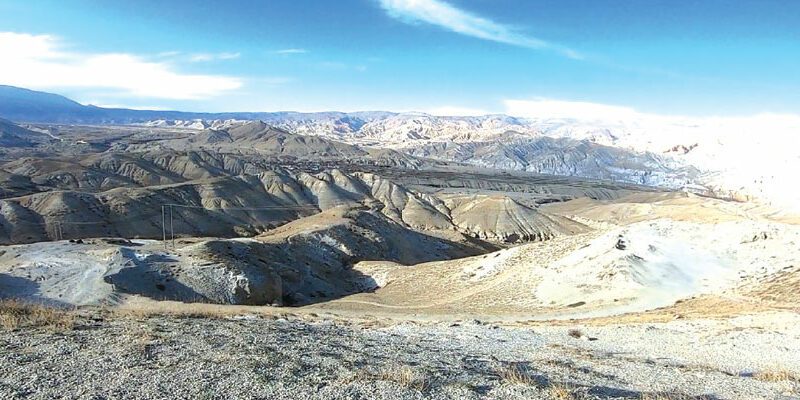
When we think of Nepal’s natural resources, we usually imagine rivers, forests, and mountains. Yet hidden deep within our Himalayan rocks lies another resource that has recently drawn attention: uranium. In Upper Mustang, surveys have verified the presence of uranium in the local rock and soil, and geologists believe that it is of medium grade. Traces of uranium have also been reported in other regions, from Makwanpur to Baitadi. These findings raise a big question for our nation: should Nepal explore uranium as a resource, or should we treat it as a sensitive material that necessitates extreme caution?
Nuclear geopolitics
Uranium is not a typical metal. Nuclear reactors are powered by this fuel, which is also the base material for nuclear weapons. Processing it requires advanced technology and strict security protocols. In Mustang, the uranium appears in natural formations close to rivers and agricultural fields. The health of humans, agriculture, and local ecosystems may be impacted if particles are dispersed into the air or water. Prolonged exposure to contaminated drinking water, soil, or air could damage the respiratory, urinary, or circulatory systems. This means Nepal cannot even begin to think about mining without first establishing careful scientific studies of soil, air, and water quality in the surrounding region. In fact, the presence of uranium should be seen not only as a potential energy resource but also as a scientific challenge that requires monitoring, research, and preparation before any extraction could be considered.
Advocates argue that uranium may serve as a pathway to energy independence. Nuclear power, in theory, could produce electricity on a massive scale and transform the economy. Historical precedent, however, serves as a cautionary tale. The environmental costs of uranium mining have been high, and local populations in countries like Niger and Namibia have often remained impoverished for decades. Uranium may become a “resource curse” rather than a boon in the absence of robust governance.
Nepal is in a delicate position, sandwiched between two nuclear powers, India and China. Uranium extraction or export would generate substantial geopolitical scrutiny. Simultaneously, Nepal has signed international treaties that guarantee the peaceful utilisation of nuclear materials. Despite the existence of a national radioactive materials act, there is ongoing debate regarding the specific policies regarding the extraction and utilisation of uranium. We lack the necessary resources to manage this sensitive asset due to the absence of a well-defined framework.
Strategic foresight
As a Nepali researcher pursuing a PhD in materials science in the United States, I see uranium not just as a mineral deposit but as a test of how science and policy must walk together. Radiometric surveys, microscopy, and careful environmental monitoring are some of the advanced technologies needed to determine the form and purity of uranium, which is essential for safe handling. Technology, however, is insufficient on its own. Even the most advanced research cannot prevent misuse in the absence of strong rules and regulations, transparent governance, and public trust. My own research on nuclear material and alloys has taught me that materials can be both powerful and fragile; the same applies to national resources. How Nepal approaches uranium today will shape whether it becomes a source of conflict or a catalyst for building research capacity and scientific self-reliance.
Instead of hastily extracting uranium, Nepal should view it as an opportunity to establish a more comprehensive scientific and technological foundation. This discovery can justify investments in science education, research laboratories, and international partnerships. The knowledge acquired from uranium research can be utilised in the creation of innovative materials, medical treatment, medical imaging, and the advancement of safer energy systems. In this regard, uranium can serve as a catalyst for a broader culture of scientific innovation, rather than a fast source of income.
Nepal’s mountains have always symbolised strength and wisdom. We should make sure that what lies beneath them is handled with the same care. Managed wisely, uranium could attract research and educational investment that benefits generations to come. Managed poorly, it could bring environmental damage and geopolitical instability. The choice is ours. Will uranium be remembered as Nepal’s missed opportunity or as the moment we resolved to prioritise our people, science, and responsibility?
(The author is currently pursuing a PhD in Materials Science at Oregon State University in the United States.)
How did you feel after reading this news?