This post was originally published on here
Woo! Science is a column of science news and newsmakers in Worcester and the region. Got a science news idea? Email Margaret Smith at [email protected].
Think it’s too cold to think about bees? Well, what if you actually are a bee? Then you’d have to think about it.
Right this minute, bees are still busy being bees, including forming ball-like huddles in their hives, through which bees rotate, so everyone stays warm. Let’s face it: these guys work hard. Not just making honey, not just pollinating billions of dollars in food and other crops valued by humans, even as pesticides, climate change and those insidious Varroa mites seem intent harm or kill them and everything they do.
And bees took a big hit last year, which in turn hit both commercial beekeeping operations and growers.
Can we do anything about all this in 2026? Bill Blocher thinks we can.
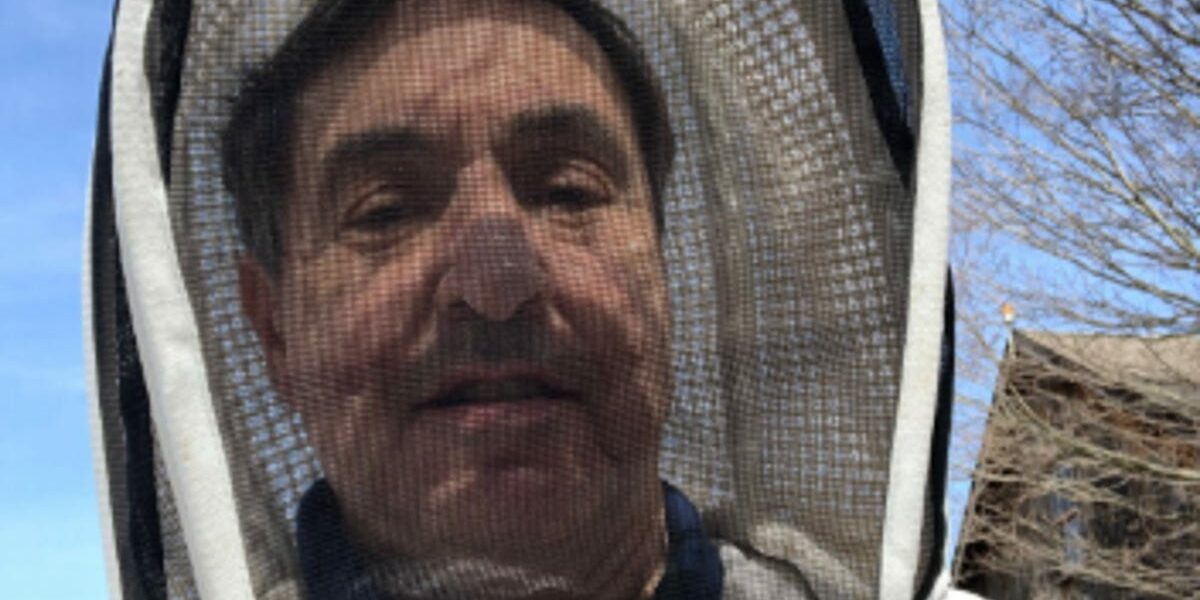
Blocher, president of the Worcester County Beekeepers Association, directs the association’s bee school, whose next session starts Feb. 11. No, not to teach bees, but to teach beekeepers optimal care of their buzzing buddies.
“We just celebrated our 125th year of existence, and we are one of the oldest, if not the oldest in the country, and we’re certainly the largest in Massachusetts,” said Blocher.
The association buzzes like a veritable hive, with approximately 1,600 members, including some who live outside Worcester County, including Blocher, a Framingham resident.
During that century and a quarter, the association has been bringing together bees and the people who love them. They help keep them supplied with honey jars, because Blocher said, most every beekeeper produces and distributes honey. Blocher also directs the association’s bee school, educating beekeepers on the essentials of beekeeping.
And the essential nature of bees for pollinating our food supply is hard to overestimate.
In January 2025, the U.S. Department of Agriculture said commercial beekeepers began reporting severe losses in commercially managed operations. As losses unfolded, it was evident that over 60% of commercial beekeeping colonies had been lost since the prior summer, representing 1.7 million colonies and an estimated financial impact of $600 million.Blocher said, “Starting last year, there has been a severe decline in survivability.” As one example, Blocher said, bees pollinate almond orchards, and said, “There was a big panic last year. The commercial beekeepers didn’t have enough bees to pollinate.”
The U.S. Department of Agriculture, which tracks honey bees population, estimates that bees pollinate about $15 billion in crops each year, including more than 130 types of fruits, nuts and vegetables.
Blocher said, “30 percent or 40% of our food that we eat comes from pollination. Berries, apples, all those things produced from flowers that need to be pollinated.” Blocher added, “Honey bees are a commercial way we can bring bees to orchards and bogs, to perform that necessary pollination.”A major problem is the infamous Varroa mite, an invasive species from Asia, where its primary host is an Asian honey bee species. And who are our homegrown bees? That’s complicated, too. The western honey bee descends from a European variety, and now ranks as our most common variety. It’s managed to settle in, among the myriad native species of bees.
Genetics and the Varroa mite fight
One possible solution, Blocher said, is a variety of honey bee Blocher said has demonstrated some genetic resistance to the Varroa mite. “So, as a club, we have made purchases of these special bees,” including for first-year beekeepers.
Blocher said these bee’s special weapon lies in their behavior. Bees, on the whole, are fastidious housekeepers. Blocher said these particular bees have shown traits such as detecting larvae infected with mites. The bees will destroy the larvae, or find other ways to disrupt the cycle that allows mites to gain greater ground in the hive.
Bloch, a retired computer science professor who taught at Boston University, became interested in bees while taking a class at Penn State. “I was learning how to produce queens that have the ability to detect mites.” This includes insemination with semen from male bees, known commonly as drones, from bee colonies showing the ability to ditch the mites, and mite-carrying larvae.
The Department of Agriculture has been working on this issue with commercial beekeepers, including Merrimack Apiaries of Billerica. In 2011, the Department of Agriculture engaged a study of mite-resistant bees, Blocher said.
“They have a line of bees that exhibit hygenic behavior,” said Bloch, who said one goal is to make bees that show mite-resistant behavior available more widely to beekeepers in the association.
A 2022 study by the Department of Agriculture, with bees from packages beekeepers in Georgia untreated with miticides had a 3% survival rate. The treated bees had a 62.5% survival rate. But, the issue of miticides’ effectiveness brings questions as well as answers with the 2025 report showing some resistance among mites.
Are local hobbyist beekeepers making a difference? Blocher believes they are. “As a beekeeper, the most satisfying part is when you get to harvest the honey, because everybody loves honey, right?” Blocher said. “So, I harvest honey. I also make a lip balm, honey cream, and candy, all kinds of things the bees produced, all natural, and I sell them at the farmers’ market. That is the most fun of it.”
The key is a healthy population, said Blocher. In cold weather, bees will gather to form a basketball-like shape, with bees in the interior getting the most warmth. Over the season, the bees will rotate their positions. “A colony has to be able to bring enough food to survive the winter. Also, to cover enough of what the beekeeper steals.” Yes, bee whisperer though you may imagine yourself, you’re taking their food stores, so balance is important.
“We need enough time for the bees to make new queens, and establish an adult population enough to sustain the winter,” Blocher said. “The bees start out the same, but they morph into different roles: scouts, foragers, morticians. It’s all very fascinating.”
Flower power
All the hype you hear about perils facing the bee population is true, said Sebastián Vélez, entomologist and biology professor at Worcester State University.
“The most important thing about bees is their pollination services,” said Vélez. “There are many crops that need to be pollinated by bees. If these did not exist, we would not get the fruit.”
Ease up on the pesticides, Vélez implores.
Do small acts help, such as planting flowers and leaving grass go unmowed? “I’m sure they are very helpful. The more flowers you have, the better, for many reasons, and not just aesthetic reasons,” said Vélez, who once worked as a landscaper, and said, “I have an acre, and I started mowing my lawn in late June, and it’s perfectly fine. Now, I’m mowing my lawn maybe three times a year.” And, Vélez said, ditch the gasoline-powered lawnmowers without catalytic converters. The pollution effect is not negligible.
“We are absolutely overusing pesticides. You cannot get a bag of fertilizers that don’t have pesticides in them.” Use particular caution with pesticides containing the prolific Dichlorophenoxyacetic acid, known in shorthand as 2-4D, a decades-old defoliant and an ingredient used in agent orange, whose health consequences both for combat personnel and civilians in the Vietnam War still haunts our history.
But humans have a curious and turbulent relationship not only with bees, but many other insects, and spiders, their cousins in the great family of arthropodia, which means, simply, “segemented foot.” Perhaps it’s our survival inheritance from far-distant ancestors, a natural fear or repelling sense toward creatures that might prove dangerous.
“DNA, something fromour past that doesn’t help us anymore,” said Vélez. “It’s from a time when those things were useful. I’ve been stung by a bee once, and I can’t remember when it was, maybe 10 years ago. I’ve been stung by a million wasps. It’s not worth spraying pesticides and killing them, disturbing them.”
The next Worcester County Beekeepers Association bee school takes place on Zoom, taking place Wednesdays at 7 p.m. and runs Feb. 11 to April 1. Each month afterward features in-person meetings at beehives. Cost is $49.95. First-year students receive membership through Dec. 31. More info: worcestercountybeekeepers.org.