This post was originally published on here
Many psychiatric disorders are more biologically related than previously understood, having more genetic similarities than differences, a new study shows.
More research is needed to understand how these genetic similarities manifest in different groups of people, but researchers say their findings may lead to improvements in the way psychiatric conditions are diagnosed and therapies that can treat multiple disorders at once. Some disorders may not need to be treated as distinct conditions, the researchers said.
MORE: Sleeping in on weekends may benefit teenagers’ mental health
“Right now we diagnose psychiatric disorders based on what we see in the room, and many people will be diagnosed with multiple disorders,” researcher Andrew Grotzinger, a psychology and neuroscience professor at the University of Colorado Boulder, told a university publication. “This work provides the best evidence yet that there may be things that we are currently giving different names to that are actually driven by the same biological processes.”
More than half of people diagnosed with a psychiatric disorder will later be diagnosed with at least one more psychiatric disorder, past research shows.
“By identifying what is shared across these disorders, we can hopefully come up with ways to target them in a different way that doesn’t require four separate pills or four separate psychotherapy interventions,” Grotzinger said.
In an interview with the Washington Post, Grotzinger likened the current psychiatric treatment approach to diagnosing a person with a respiratory illness with a separate disorder for each specific symptom — a runny nose, sore throat and cough — and then prescribing them three different medicines. That, he said, would be viewed as a “medical misstep.”
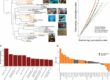
For the study, published in the journal Nature, researchers analyzed DNA samples from 1 million people who had at least one of 14 psychiatric disorders and 5 million people without psychiatric disorders. They found “pervasive genetic overlap,” noting that five underlying genomic factors involving 238 genetic variants account for the majority of differences between people who have a psychiatric disorder and those without it.
The researchers grouped psychiatric disorders into five categories based on their genetic similarities:
• Disorders with compulsive features, like anorexia, obsessive-compulsive disorder and Tourette syndrome
• “Internalizing” conditions like depression, anxiety and post-traumatic stress disorder
• Substance use disorders
• Neurodevelopmental conditions like autism and attention-deficit/hyperactivity disorder
• Bipolar and schizophrenia disorders
Bipolar and schizophrenia long have been viewed as being very different, and many psychiatrists will not diagnose someone with both disorders, the researchers said. But they found about 70% of the genetic signal tied to schizophrenia also is linked to bipolar disorder.
The researchers also gained a better understanding of the biological pathways that underlie the five groups of disorders. For instance, the genes that influence excitatory neurons are more likely to be overexpressed among people with bipolar disorder and schizophrenia. These neurons help transmit signals across other neurons. Also, people with depression and anxiety are more likely to have variants in the genes that control cells that protect the brain’s wiring infrastructure.
The study was limited by using data mostly limited to people with European ancestry. The researcher said it remains to be seen how their findings will be used in medicine.
Ramiro Salas, a senior research scientist at Menninger Clinic in Houston, who was not involved in the study, told the Washington Post that the research is a “beautiful step in the right direction that adds data to use in the future, when we redefine psychiatry using biology.” But he also cautioned that it goes against the push for personalized psychiatry. He said he does not believe all depression patients have the same biology, noting that anti-depressants only work on one-third of patients.