This post was originally published on here
Editor’s Note: This interview is part of an ongoing Star series highlighting Kansas Citians from historically underrepresented communities and their impact on our region. The series builds on The Star’s efforts to improve coverage of local communities. Do you know someone we should interview? Share ideas with our reporter J.M. Banks.
Antawan Daniels, a Kansas City–based chemist, educator and community advocate has spent his career bridging the gap between science and access.
A tenured chemistry professor at Metropolitan Community College, he has balanced his teaching with leading 5S, an organization focused on science literacy, advocacy and advisory work. His path into science was shaped by early exposure to chemistry, personal experiences with health care inequities and a belief that scientific knowledge can be used to protect communities rather than exclude them.
Advertisement
Advertisement
Over time, his work has evolved from the classroom into neighborhoods where access to STEM education and scientific resources has historically been limited.
Through 5S, Daniels concentrates his efforts on Kansas City’s urban core, particularly ZIP codes where he works to make science approachable, relevant and culturally grounded. His approach connects chemistry to everyday decision-making, health outcomes and personal development, helping young people and families see science as something they can engage with rather than avoid.
By focusing on self-efficacy, representation and early exposure, Daniels aims to build long-term pathways into science-based careers for youth of color while challenging the structural barriers that continue to limit who is encouraged to participate in STEM fields.
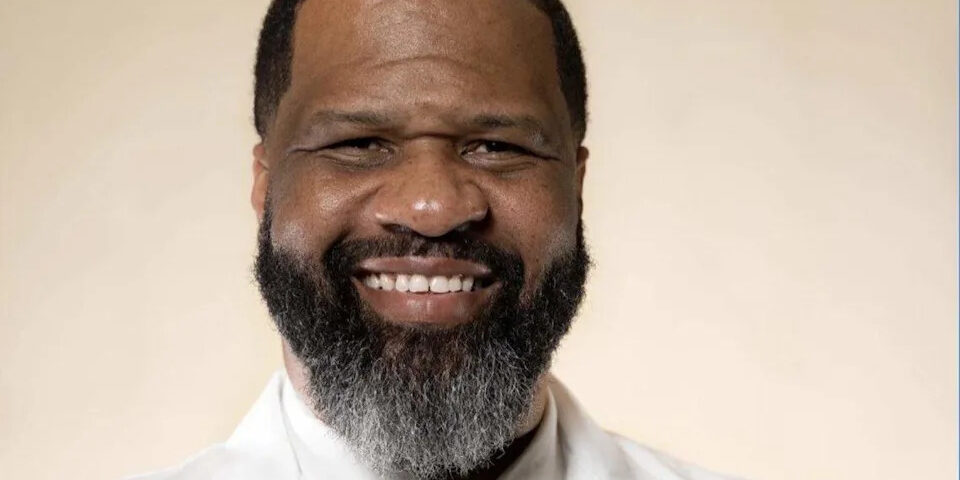
Antwan Daniels, founder of 5S, a Kansas City programs that link chemistry to everyday life in Prospect Corridor zip codes like 64127, boosting representation and STEM confidence locally.
Can you begin by telling me about where you are from and what you do?
I am originally from Dallas, Texas. I was married to a woman from Wyandotte County, Kansas, in 2003, so that’s how my time in Kansas City started out.
Advertisement
Advertisement
I work full time with MCC, Metropolitan Community College, Kansas City. I am a tenured chemistry professor. That is my full-time role. I am also a principal investigator for a National Science Foundation grant. I run a service based business called 5S, which stands for Scientists Seeking Strategic Sustainable Solutions. There, I am also the principal investigator, and we push science in three ways: advisory, advocacy and science literacy.
What first drew you to science and education and when did you realize it could be a tool for community impact?
What first drew me in was listening. I watched a movie called “Medicine Man” with Sean Connery. He was working for a pharmaceutical company, but he was trying to do the right thing and protect an Indigenous community from being corporatized and rolled over. I remember thinking, you can do that? You can do that with science? I thought that was a cool concept, using science to protect communities.
That led me to taking chemistry in high school at the AP level, and then having a Black chemist at Langston University (as a mentor), which is an HBCU. My grandmother was sick due to HIV, and I saw how hard the drugs were on her body. I always wondered what if I could make better molecules. That pushed me toward medicinal chemistry. The money is in chemical engineering, but I shifted toward medicinal chemistry, which focuses on how medication molecules interact with the body. That field is sometimes called pharmacognosy, meaning the study and treatment of disease through medicinal practices.
At what stage in your career did you decide to build something like 5S?
So 5S evolved over time. I had a 4S before that, which focused on tutoring and working with kids in a fun way. With 5S, I started asking what was missing in the ecosystem. I listened to the community.
Advertisement
Advertisement
I wrote a chemistry textbook through Great River Learning. The book did well, and that gave me insight into what the community needed. I was seeing organizations like Health Forward, the Black Healthcare Coalition and Reach Healthcare. I also ran across people like Dan Crenshaw and realized our community was missing science literacy.
That lack of science literacy leads to discomfort when interacting with pediatricians, doctors, nurses, and radiology techs. We have programs like the Health Science Institute at Metropolitan Community College, but a lot of people from the surrounding community were not attending. People were coming from farther out.
That showed me that certain ZIP codes, especially stressed ZIP codes like 64109, 64127, 64128 and 64130, are at a tipping point. I asked myself what I could do to improve environments and cultures like that, and that is where 5S came from.
How did your own educational journey shape the way you think about access, opportunity, and representation in STEM fields?
It shaped it completely. I won a poster presentation even though I stuttered. At the graduate level, I won an oral presentation for my work on brucellosis. I will actually be presenting that work again on the 24th at Science City in Canada.
Advertisement
Advertisement
For a long time, I was what I would call colorblind. I thought if you were great at science, someone would find you. That was true for me early on. I grew up hearing about people like George Washington Carver and Percy Julian, one of the greatest Black chemists ever. I thought science could not really block you.
It was my HBCU experience where I had three Black chemists around me daily that changed things. I worked in the lab department and on a goat farm, grinding ruminant fluid for experiments. Doing that work made me think about where space is made for people like me.
At first, people assumed I was foreign born. They would ask if I was from Nigeria or Ghana. I would tell them no, I am from Dallas, Texas. I had to find my space as an American Black chemist without a pedigree background. On my dad’s side, there was some engineering and education. On my mom’s side, only one great cousin had completed a bachelor’s degree.
How do you describe the mission of 5S to people who may not come from a science background?
I describe it as science literacy for all. Everyone deserves to be seen and experience science at their level. That includes seniors and 5-year-old kindergartners. I even work with kindergartners at Harvard Christian School.
Advertisement
Advertisement
My three pillars are science literacy, advocacy and advisory. We also say we communicate, we collaborate and we are chemists. Communication and collaboration run everything. No matter the field, those skills lift everyone.
Kansas City struggles with collaboration. There is a lot of affinity based networking and opportunity hoarding. This is real. There are grants that address opportunity hoarding. We often decide who should win before we even begin.
What does the day-to-day work of 5S look like, and who are the communities you most often serve?
We focus primarily on the Prospect Corridor, including 64110, 64127 and 64130. We work with people who are still interested in science but have not had the opportunity to grow.
We have worked with companies like BioNexus on grant writing. We work with the Boys and Girls Club on social-emotional learning. We take chemical reactions and help students experience them, then relate them to everyday life.
Advertisement
Advertisement
For example, we might do a reaction that turns blue instead of green and talk about conditions. Then we role play that with something like being told to take the trash out. What were the conditions? What was your response? What was the outcome? We show that chemical reactions mirror behavior and relationships, including how bonds are made and broken.
In your experience, what are the biggest barriers preventing young people of color from entering science based or research driven fields?
The biggest issue is self-efficacy. Self-efficacy has four parts.
Mastery experiences are hard to get when schools lack budgets or labs. When kids are told science is dangerous or they might mess something up, inquiry slows down.
Vicarious experiences are also limited. Seeing science on TikTok helps, but it is not proximal. Students need to see people like them doing science in real life.
Advertisement
Advertisement
Social and verbal persuasion matters, too. Hearing no too often discourages participation. Parents might say they struggled in math, so their child will, too. At higher levels, students are encouraged to attend college, but not taught how to navigate it.
Finally, there are physiological effects. There is fear of messing up, fear of not being seen as intelligent and fear of failure. Our community often feels we do not get many chances, so mistakes feel costly. This leads to what I call the golden child effect, where one child is pushed toward STEM and others are not.
What are the biggest challenges you have faced opening the field to youth?
Honestly, people are more challenged by me doing the work than the kids. People want youth in STEM, but they question why 5S should be the one doing it. I had to earn trust. Some contracts took over a year to secure. Once people saw the work in action, they understood.
Have you encountered misconceptions about Black chemists or scientists?
Yes. One misconception is questioning how American-born Black chemists got there. There is resume checking and credential scrutiny. People ask about ACS accreditation or physical chemistry coursework.
Advertisement
Advertisement
Another issue is being pushed out of bench work into administrative roles. You make good money, but you lose touch with the science itself.
What are your plans and goals for the future, and how would you like the organization to grow?
The plan for 5S is to increase grant writing capacity and triple revenue by 2026. We want to build social venture studios, expand community capital funding, and bring scientists on retainer.
We are also developing advocacy programs like Crucial Conversations with Reach Healthcare and Wyandotte County Health. Another project we completed is called Space and Face Black Students in Kansas City, a mixed methods research study examining microaggressions, Black fatigue and aspirations in STEM.