This post was originally published on here
AKP Phnom Penh, January 17, 2026 —
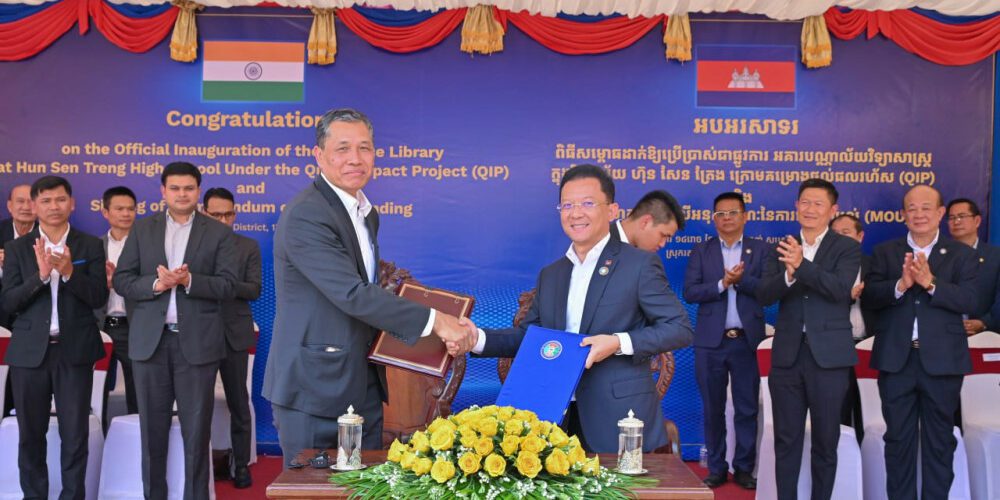
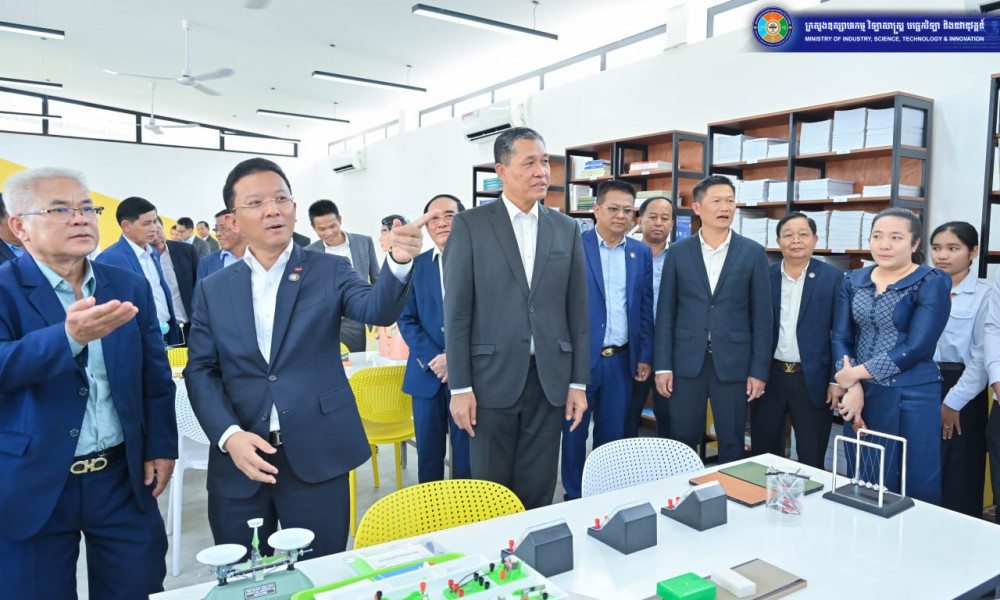
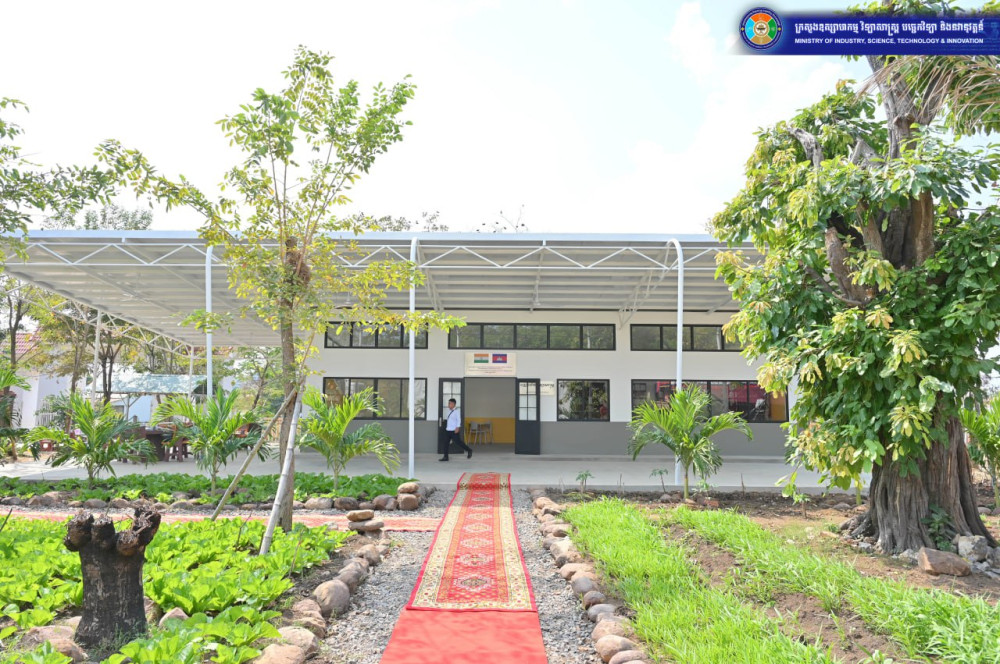
The Ministry of Industry, Science, Technology & Innovation (MISTI) and the Indian Embassy in Cambodia inaugurated a science library at Hun Sen Treng High School in Ratanak Mondul district, Battambang province, marking a new contribution to the technology-driven development journey.
This science library was funded by the Government of the Republic of India through a Quick Impact Project (QIP) under the Mekong-Ganga Cooperation framework. It is expected to be a vital driving force in promoting Science, Technology, Engineering, and Mathematics (STEM) education for students in this remote area.
During the event, Minister Hem Vanndy emphasised the importance of this science library in advancing human capital development in the region.
He said, “Human capital is key to enhancing Cambodia’s competitiveness in the digital age. We believe that this science library will become a warm second home for students who love learning and have a spirit of curiosity.”
The Minister also encouraged students to study diligently and make full use of the library’s resources, enabling them to develop into the “cream of the crop” of a new generation shaping Cambodia’s future.
The library is equipped with facilities, including a solar-powered air-conditioning system, science equipment, and a water purification system donated by the Phnom Penh Water Supply Authority.
H.E. Shri Vanlalvawna Bawitlung, the Indian Ambassador to Cambodia, noted that the project is a testament to the mutual trust between the two countries, which view science education as an indispensable pillar of sustainable development. He added that the library will encourage young learners not only to read, but also to conduct experiments, ask questions, and develop critical thinking skills.
In conjunction with the inauguration, MISTI and the Indian Embassy in Cambodia also signed a Memorandum of Understanding (MoU) for the construction of a second science library in Sangke district. Under India’s Act East policy, Cambodia has received support for a total of 66 QIP projects, including science library initiatives, of which 47 have been completed.
This initiative is expected to directly benefit approximately 1,500 students and support Cambodia’s 2050 vision, which identifies STEM as a key catalyst for driving economic growth in the context of Industry 4.0.
AKP-MISTI