This post was originally published on here
Every dog owner might like to think their furry companion is the cutest.
But scientists have now revealed which pets really do have the friendliest faces – and the results may surprise you.
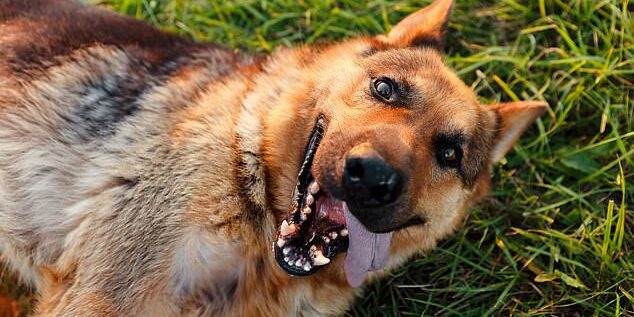
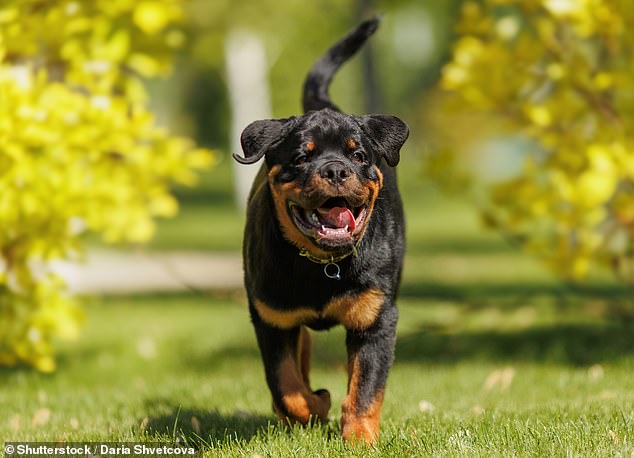
Researchers say that some scarier breeds actually have the happiest looking faces, with German Shepherds and Rottweilers topping the list.
This is because these more wolf-like dogs can use more facial muscles to create their expressions, and so appear happier to humans, experts said.
Meanwhile, more stoic breeds like the Shih Tzu might only use half as many muscle groups in their faces when playing, which makes them less expressive.
Dr Veronica Maglieri, an ethologist from the University of Pisa, told the Daily Mail that these dogs ‘use a larger number of facial muscle movements during play, producing a more elaborate and visually expressive play face.’
She adds: ‘Breeds were not selected to look happier, but changes in facial structure can incidentally affect how expressive their play face appears.’
So, do you agree with Dr Maglieri’s results? Find out for yourself using the interactive graphic below.
Since humans began domesticating wolves around 40,000 years ago, dogs have become humanity’s most successful genetic engineering product.
From a single species of canine, humans have created over 300 recognised breeds with their own distinct physical and behavioural characteristics.
What Dr Maglieri wanted to know was whether millennia of selective breeding had also impacted pooches’ ability to communicate with one another.
She looked at the relaxed, open-mouthed expression that dogs and wolves use to show that they want to play, keeping interactions friendly rather than aggressive.
The researcher then carefully analysed videos of 210 dogs, representing 29 popular breeds, and catalogued the movement of different muscles and muscle groups.
Although all the dogs created the same facial expression, some breeds were able to employ significantly more muscles.
This is like the difference between someone smiling with just their lips and someone whose whole face is lit up by a grin – it’s the same emotion, just with different degrees of expression.
Dr Maglieri says: ‘Breeds such as Poodles, German Shepherds, Basset Hounds and Rottweilers tended to use a larger number of facial muscle movements during play.
‘Other breeds, such as Beagles, Pugs or Jack Russell terriers, showed simpler versions of the same signal, using fewer facial muscle movements.’
At the most expressive end of the spectrum, dogs were able to use up to seven different muscle groups to create their play face.
Meanwhile, the especially glum-looking Beagle could only use two muscle groups: The lower lip depressor and the mouth stretch.
The researchers had expected flat-faced dogs like Pugs and French Bulldogs to have markedly less facial expression.
However, although they did have limited facial movement, this wasn’t massively different from other dogs with similar head sizes.
While this signal is primarily intended for other dogs, a consequence is that some breeds look much happier to humans.
‘In humans, laughing and smiling involve opening the mouth, often showing the teeth, pulling back the corners of the mouth, and raising the cheeks, which creates small wrinkles around the outer corners of the eyes,’ says Dr Maglieri
‘When we see a similar facial configuration in other animals, we naturally tend to interpret it as a smile.’
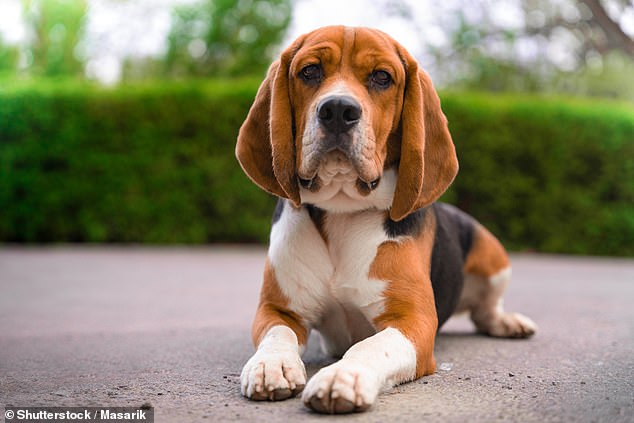
On the other hand, when the dog can employ fewer muscles, that ‘smile’ is less pronounced and the dog seems less happy.
The important thing to remember is that this does not mean that German Shepherds are necessarily any happier than Beagles.
The bigger question is whether this means that some breeds have a harder time communicating.
Although dogs’ emotions are complex, the relaxed, open-mouth expression does seem to be extremely important for showing a playful intent.
Dr Maglieri’s research found that dogs will even make this ‘smile’ when they play with horses.
‘Remarkably, horses respond to it in a way that closely resembles contagious laughter in humans,’ she adds.
‘This suggests that the relaxed open-mouth expression is a very widespread and important social signal, potentially understood even across species.’
However, it isn’t yet clear whether some breeds’ limited facial movement can hamper this communication.