This post was originally published on here
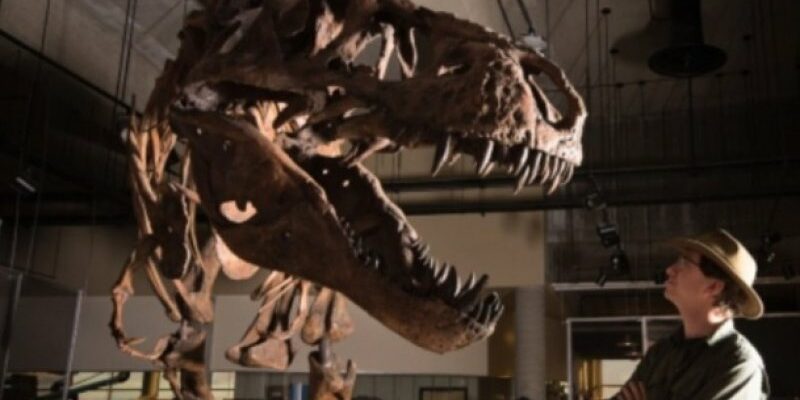
Tyrannosaurus rex, widely regarded as one of the largest and most formidable land predators to have ever lived, may have grown far more slowly than scientists previously believed.
A new study has found that the iconic dinosaur likely took about 40 years to reach its full adult size — around 15 years longer than earlier estimates.
The research, published this week in the journal PeerJ, analysed the microscopic structure of leg bones from 17 Tyrannosaurus fossil specimens, ranging from juveniles to fully grown adults. By examining growth rings in the bones, similar to those found in tree trunks, researchers were able to reconstruct the dinosaur’s growth pattern over its lifetime.
Using polarised light, the team identified previously unknown growth marks that had gone undetected in earlier studies. These findings revealed that Tyrannosaurus followed a more gradual growth trajectory than expected, spending much of its life at juvenile or subadult sizes.
“Rather than rapidly reaching adulthood, T-Rex grew more slowly and steadily over several decades,” said lead author Holly Woodward, a paleohistologist at the Oklahoma State University Center for Health Sciences.
The study also found that Tyrannosaurus did not grow at a consistent rate year after year. Growth-ring spacing varied significantly, indicating flexible growth depending on environmental conditions.
In years when food was scarce or conditions were harsh, growth slowed, while favourable conditions allowed for spurts of rapid development. This adaptability may have helped the species survive challenging periods and ultimately outcompete other carnivores.
Tyrannosaurus lived in western North America during the late Cretaceous Period, shortly before an asteroid impact 66 million years ago led to the extinction of the dinosaurs and much of life on Earth. The predator could grow over 12 metres long, weigh more than seven tonnes, and wield a massive skull with one of the strongest bites known in the animal kingdom.
Previous research had suggested that T-Rex lived for about 30 years, but the new findings point to a longer lifespan of roughly 45 to 50 years. According to study co-author Jack Horner, a paleontologist at Chapman University in California, the extended growth period likely allowed younger Tyrannosaurus individuals to exploit different food sources than fully grown adults.
“Younger animals may have relied more on hunting smaller prey, while older, larger individuals were probably more opportunistic and did more scavenging,” Horner said. This separation in feeding strategies could have reduced competition between individuals of different ages within the same species.
The study drew on a larger number of Tyrannosaurus specimens than most previous research, many of which are housed at the Museum of the Rockies in Montana. The researchers also employed a new statistical approach that combined growth data from multiple fossils to better estimate the species’ overall growth pattern.
While scientists acknowledge that precise growth rates can never be confirmed without living specimens, the authors say the new estimates offer a more realistic picture of how such an enormous predator developed. Together, the findings provide fresh insight into the life history of one of the most famous dinosaurs to ever walk the Earth.