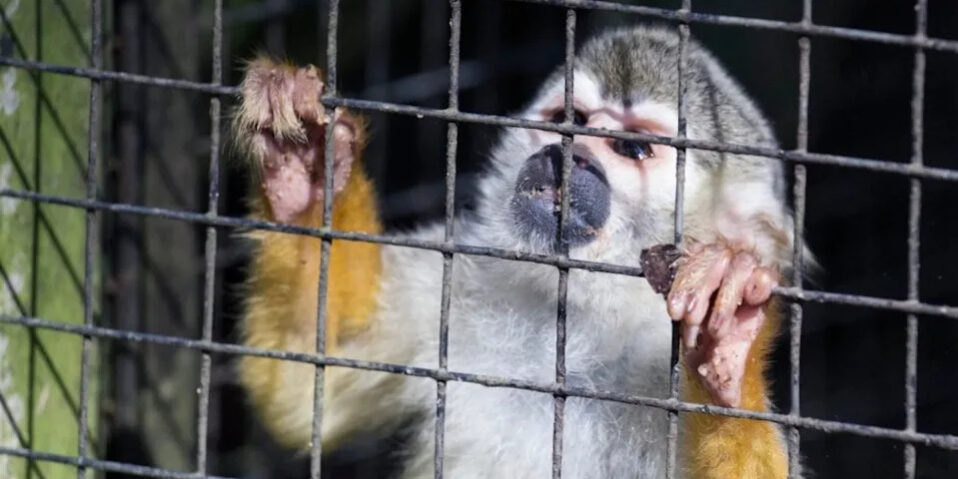
This post was originally published on here
The post Zoochosis: The Hidden Cause Behind Abnormal Animal Behavior appeared first on A-Z Animals.
In this article, we…
-
Define zoochosis as a popular term to characterize the abnormal, repetitive behaviors seen in some captive animals.
-
Detail that zoochosis can come from a variety of factors, including social isolation, small enclosures, noisy visitors, and lack of enrichment.
-
Explore how zoos are working to reduce zoochosis through different types of enrichment, from nutritional to social, with animals able to spend time together or not.
-
Dive into ways visitors can be mindful of how their presence may drive zoochosis.
A tiger walks the same worn groove along the edge of its exhibit like a broken record. A parrot methodically plucks out its own feathers until bare skin shows through. To a casual visitor, these can look like odd habits or animal “quirks.” But to animal welfare researchers and zookeepers, repetitive, seemingly purposeless behaviors are a red-flag that something about captivity isn’t working for that individual animal.
Advertisement
Advertisement
Zoochosis is a popular term used to describe abnormal, repetitive behaviors seen in some captive animals. In scientific writing, you’ll more commonly see the term “stereotypies” (or abnormal repetitive behaviors): actions that are repetitive, consistent, and appear to have no clear goal. A recent review describes zoochosis as stereotypical behavior that can include pacing, head-rolling, excessive licking, hair or feather pulling, and repetitive swimming patterns in captive settings.
Zoochosis can happen due to a variety of factors.
©Sergio Re.Oli/Shutterstock.com
(Sergio Re.Oli/Shutterstock.com)
What exactly is zoochosis?
In everyday use, zoochosis is a catch-all label for repetitive, abnormal behaviors linked to stress, frustration, or impoverished environments in captivity. In advocacy writing, it’s sometimes framed as a captivity-induced psychological condition that becomes “visible” through stereotypic behaviors like pacing, swaying, bar-biting, rocking, and self-mutilation.
In welfare science, the framing is more cautious: stereotypies are strongly associated with environments that restrict an animal’s natural behavioral needs, but they do not translate into a single, perfect diagnosis. Even so, the pattern of zoochosis is concerning because these behaviors often arise when animals face chronic challenges they cannot solve, like inadequate space, limited social choice, restricted foraging/hunting opportunities, or relentless disturbance.
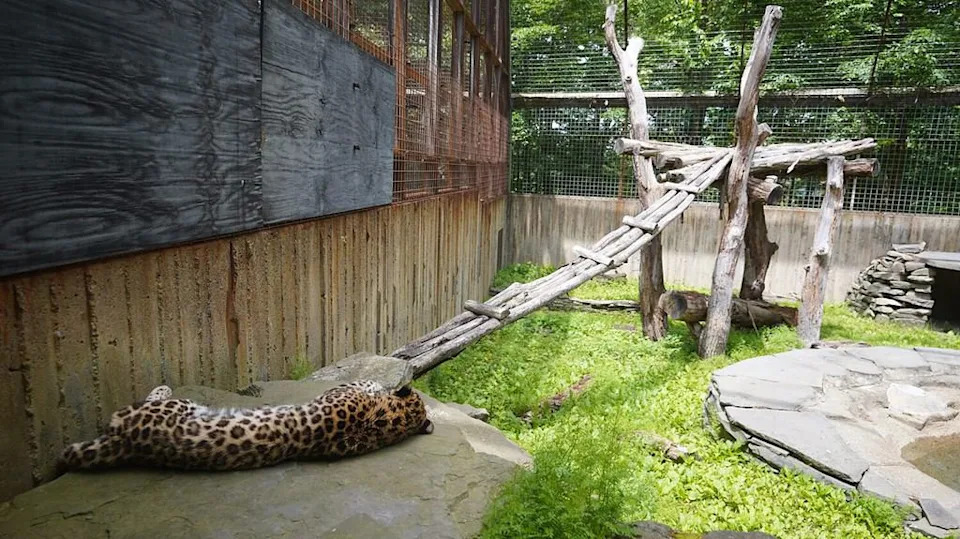
Cheetahs have revealed multiple zoochosis behaviors, like pacing, that scientists can study to help make better animal welfare policies.
©305115181/Shutterstock.com
(305115181/Shutterstock.com)
Where did the word “zoochosis” come from?
The term “zoochosis” was coined in 1992 by Bill Travers, co-founder of the Born Free Foundation, to describe obsessive, repetitive behaviors he observed in zoo animals. While the term isn’t used as a formal veterinary diagnosis, it entered popular language because it’s memorable and captures a hard-to-ignore truth: when an animal repeatedly paces, sways, or self-harms, something is worth investigating.
Common stressors that can contribute to zoochosis
No two species experience captivity the same way, and no two individuals respond identically. But research repeatedly points to a few broad pressure points.
Advertisement
Advertisement
Boredom can drive zoochosis behavior, as captive life can be predictable and low challenge: food appears without searching, space is limited, and novelty is scarce. A 2023 review notes that stereotypies are generally more apparent in barren or substandard environments than in enclosures designed around species-appropriate habitats.
A lack of space and range can also be a key problem. Some animals are built to travel. When large-ranging species (many carnivores, elephants, some primates) can’t express natural movement patterns, pacing or route-tracing is common. The review lists pacing and anxiety-related behaviors in captive tigers and stereotypical pacing in leopards as examples.
Then there are problems due to no social stimulation. For highly social species, isolation—or forced proximity with incompatible neighbors—can be deeply stressful. Early-life history matters too: research discussed in the review highlights that lack of social interaction and parental separation are linked to abnormal behaviors in captive apes, and that improved social housing can help over time.
Routine can be comforting, but unpredictable events—especially around feeding or aversive experiences—can elevate stress that may lead to zoochosis. The 2023 review describes welfare research showing that unpredictable events tend to provoke stronger stress responses than predictable ones, and notes that predictability in animal care routines can influence primate stress levels.
Advertisement
Advertisement
Even visitors, who are part of what keeps most zoos open, can also become a source of stress. Visitor presence and behavior (noise, teasing, throwing objects) can increase aggression, reduce normal social behaviors, and elevate abnormal behavior in some species, especially primates. A working keeper’s perspective makes this feel less abstract. In a previous A-Z Animals interview with an Oregon zookeeper, they push back on the idea that animals exist to perform for guests: “My job is…to make sure that the sea lion is healthy, mentally stimulated, and safe, even if it hides from view all day.” That word—stimulated—is basically the antidote zoos aim for when they design anti-zoochosis strategies.
©Best Friends Animal Society
” loading=”lazy” width=”960″ height=”641″ decoding=”async” data-nimg=”1″ class=”rounded-lg” src=”https://s.yimg.com/ny/api/res/1.2/7SkuTbdLwgxh2SgjTRyXKw–/YXBwaWQ9aGlnaGxhbmRlcjt3PTk2MDtoPTY0MTtjZj13ZWJw/https://media.zenfs.com/en/a_z_animals_articles_598/aaf39a250a06fe738465e8008d710b20″>
Visitors to a zoo should keep in mind how they might impact an animal’s wellbeing
©Best Friends Animal Society
(Best Friends Animal Society)
How modern zoos try to reduce zoochosis
One of the main tools zoos use to address these behaviors is environmental enrichment, which isn’t meant to be a fun bonus or occasional “treat,” but a core part of modern animal keeping. Environmental enrichment is an umbrella term for strategies that increase choice, novelty, and species-appropriate behavior in an animal’s day. Enrichment is designed to improve welfare, reduce undesirable or abnormal behaviors, and encourage a broader range of natural behaviors.
In practice, this can mean many things. Feeding enrichment is often the most straightforward: instead of presenting food in the same bowl at the same time every day, keepers may use puzzle feeders that require manipulation, scatter food to promote foraging, hide items throughout the enclosure, or use timed-release devices that spread feeding opportunities across the day. Research supports the idea that enrichment can make a meaningful difference.
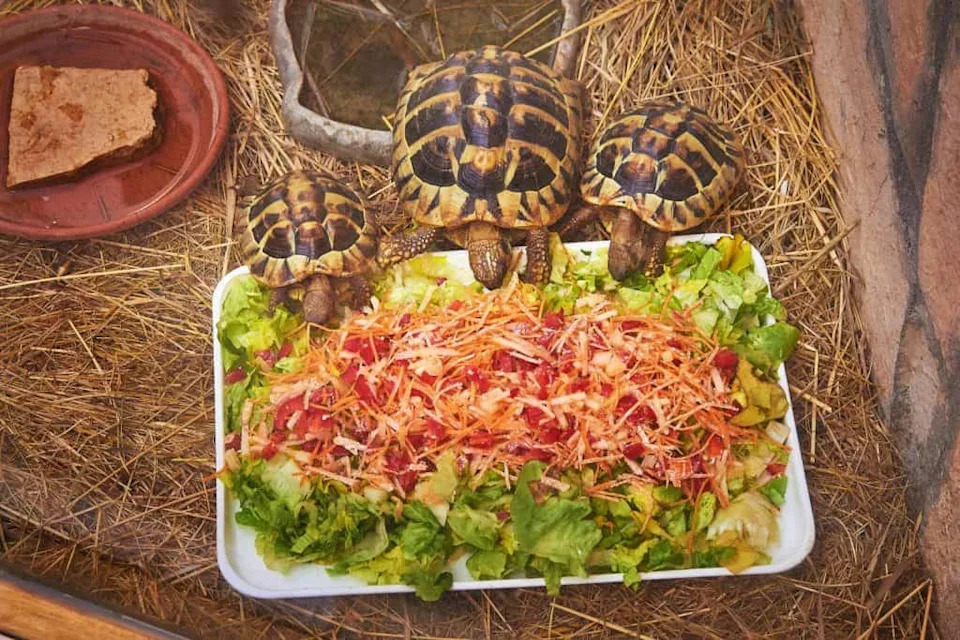
Having nutritional enrichment like treats or puzzles can help lower risk of zoochosis behavior.
©PrysMichael/Shutterstock.com
(PrysMichael/Shutterstock.com)
Sensory enrichment introduces novelty through smell, sound, or texture, like rotating objects, adding new scents such as spices or other naturalistic odors, or changing environmental stimuli to encourage exploration. Structural enrichment focuses on the physical landscape: climbing platforms, varied ground substrates, water features, and hiding spaces that allow animals to move, perch, dig, swim, or rest in ways that better match their natural behavioral repertoire. Social enrichment can mean giving animals compatible groupings, providing visual barriers so they can choose between contact and privacy, and planning controlled introductions to reduce conflict. Cognitive enrichment and positive-reinforcement training also play a role, especially for species that thrive on problem-solving and learning. Training, when done ethically, can increase an animal’s sense of control by allowing it to choose to participate in activities, move voluntarily between spaces, or engage in mental challenges that break up the same old routine.
Advertisement
Advertisement
Research supports the idea that enrichment can make a meaningful difference. Studies in a variety of settings have found that enrichment is associated with reductions in zoochosis behavior and improvements in more naturalistic activity patterns. The 2023 scientific review highlighted targeted examples, such as the use of cinnamon odor to reduce pacing in small wild cats and evidence that increasing enclosure size can reduce zoochosis behavior in cheetahs.
Alongside enrichment, habitat design has become a central pillar in efforts to prevent or reduce zoochosis-related behaviors. Older exhibits often prioritized visibility and convenience, sometimes at the expense of animal complexity and control. Modern exhibit design increasingly recognizes that welfare improves when animals can make meaningful choices. That means building complex, three-dimensional environments, especially for climbers and flyers who need vertical space and varied movement opportunities. It means offering multiple microhabitats—places that differ in temperature, light, shelter, and surface—so animals can thermoregulate and rest in ways that suit them. It also means creating retreat areas where animals can get away from crowds or other stressors without being forced into constant visibility and designing flexible spaces that allow rotation between yards or behind-the-scenes areas, so environments can be refreshed and social dynamics managed.
How visitors can help reduce zoochosis
For visitors, zoochosis should reshape what it means to “see” an animal at a zoo. If you watch an animal repeatedly pacing, swaying, or self-harming, the most useful conclusion is not that the animal is odd or entertaining, but that the behavior deserves attention. It might reflect current stressors, a past history that left a behavioral imprint, an exhibit that needs redesign, or an individual that requires a different enrichment plan or social arrangement. Zoochosis behaviors can sometimes persist even after conditions improve, which is why many welfare scientists recommend evaluating animals across multiple indicators, not just behavior alone. Behavior still matters because it signals that the animal’s environment and experience should be examined more carefully.
Zoochosis is a word that can spark debate, partly because it carries emotional weight and is often used in advocacy contexts. But whether someone prefers the popular label “zoochosis” or the scientific term “stereotypies,” the underlying message remains the same: behavior is data. When captivity contributes to repetitive, abnormal patterns, it tells us what the animal is experiencing and challenges caretakers, institutions, and the public to keep improving the conditions we create for animals in our care.
The post Zoochosis: The Hidden Cause Behind Abnormal Animal Behavior appeared first on A-Z Animals.