This post was originally published on here
Dolphins and orcas glide through the waves with effortless grace, their evolutionary sleek bodies cutting through water like they were born for it – and certainly they were, in a way.Millions of years ago, furry land mammals dipped their toes into the sea, and over time, their descendants changed their paws into flippers, lungs for deep dives, and forests for oceans.Today, these cetaceans are icons of the majestic marine world, leaping alongside boats and echoing songs across vast blue expanses. But beneath their playful image lies a profound evolutionary tale.
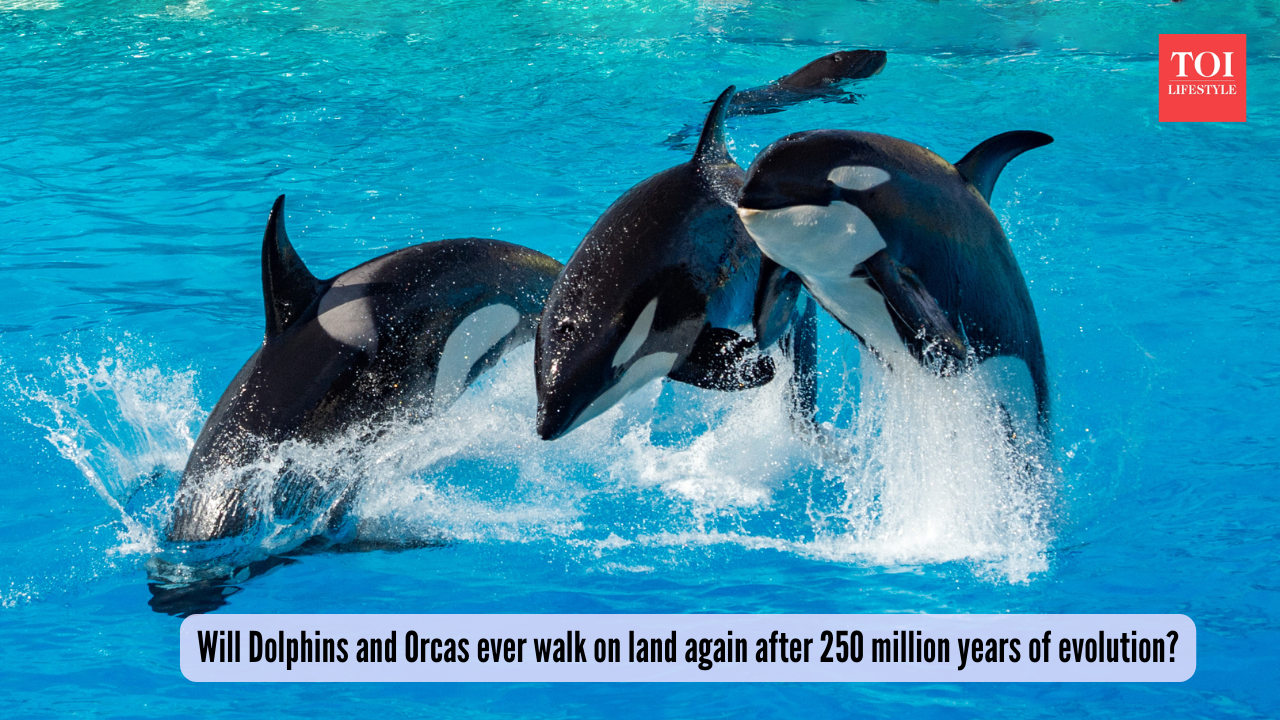
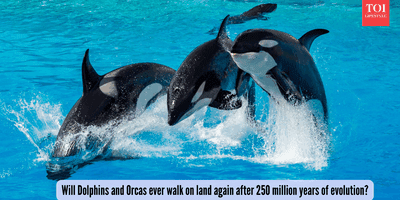
Will Dolphins and Orcas ever walk on land again after 250 million years of evolution
According to popular scientific theories, it is believed that once an organism has evolved certain characteristics over time, going back is nearly impossible.Science now confirms they’ve crossed a point where the sea isn’t just their playground – it’s their unbreakable destiny. No more daydreams of scampering back to shore; it’s like nature has locked the door behind them.
Will dolphins and orcas ever return to land?
Dolphins and orcas have evolved so deeply for ocean life that returning to land is impossible, according to a new study in Proceedings of the Royal Society B. Led by Bruna Farina from the University of Fribourg, researchers analysed over 5,600 mammal species on a land-to-sea spectrum. Once fully aquatic, evolution hits a “point of no return,” aligning with Dollo’s Law, where complex traits like limbs for walking don’t easily re-evolve.
Evolution’s one-way ocean path
Roughly 250 million years ago, early mammals ventured seaward, giving rise to today’s cetaceans. The study shows that full marine adaptation seals the deal, with no reversals. Dolphins lost hind limbs, streamlined their bodies for speed, and shifted to fish-based diets, making terrestrial life unfeasible. Farina’s team researched this irreversible shift, proving that once the threshold is crossed, land life’s road closes forever.
The body anatomy is adapted to the ocean
Their bodies are well-suited for an “ocean-only” life, as their massive sizes trap heat in cold depths, flippers propel like wings underwater, and tail flukes generate powerful thrust. Breathing via blowholes, birthing in water, and skeletons lightened for buoyancy are all well adapted to aquatic specialisation. Respiratory, skeletal, and reproductive systems remodelled over eons can’t rewind.
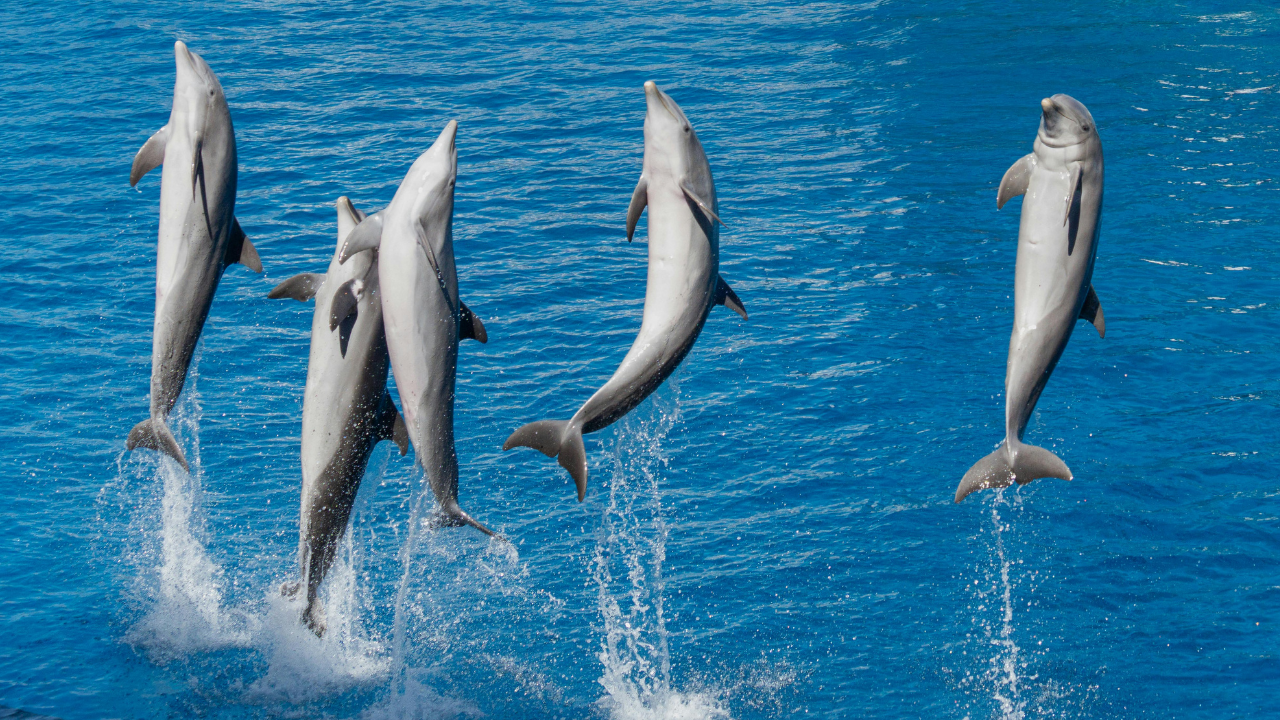
Dolphins- Representative Image
The cost of aquatic perfection
Being at the top of the food chain has its advantages, as they rule the oceans as ultimate hunters. But becoming so specialised also makes them vulnerable, with no backup plan if pollution increases or seas continue to warm.Farina says they’re “trapped in watery paths,” thriving only where food is plentiful and conditions feel right. Climate change puts that balance to the test, and without a land option, even small ecosystem shifts could spell big trouble. Their power comes at the cost of flexibility.
Urgent calls to save ocean guardians
With seas acidifying, warming, and prey vanishing, fully aquatic mammals face growing peril. The study calls for stronger conservation focus; their fixed evolution leaves no buffer for adaptation. Protecting habitats, curbing pollution, and tracking populations are becoming vital.