This post was originally published on here
The post Fireworks vs. Wildlife: Seals Became Vigilant, Gulls Got Louder After the Blast appeared first on A-Z Animals.
Quick Take
-
The study was conducted during the New Year fireworks display at the Victoria and Alfred Waterfront in Cape Town, South Africa.
-
In-air microphones were used to measure both the sounds emitted by the fireworks and the vocalizations (calling sounds) of Cape fur seals, Cape cormorants, and Hartlaub’s gulls.
-
Hydrophones recorded underwater sound, and cameras recorded seal behavior.
-
The gulls and seals showed short-term behavioral responses.
-
The study also demonstrated that firework sounds can propagate into the ocean
Fireworks divide opinions like few other subjects. To us as people, fireworks are either an exciting visual and auditory event or a stressful and unnecessary display, depending on one’s point of view. To wildlife, however, they are another source of anthropogenic (manmade) sound that is produced in both terrestrial (land) and marine soundscapes.
Advertisement
Advertisement
Many animals live within and around human settlements, benefiting from the shelter, protection, food, and warmth available there. However, they must also adapt to cope with the sounds humans produce. Sudden and impulsive sounds, such as those produced by fireworks, can trigger strong responses in these animals. A recent study published in Scientific Reports assessed the short-term impacts of in-air firework sounds on certain animal species. Here, we examine the findings.
Animal Responses to Continuous Sounds
The sounds made by humans can be divided into two groups. Continuous sounds are typically low intensity and are made by construction machinery, vessels, and urban traffic. In contrast, high-intensity, impulsive sounds are made by things like explosions and fireworks. The marine soundscape includes sounds from dredgers, echosounders, and boat engines.
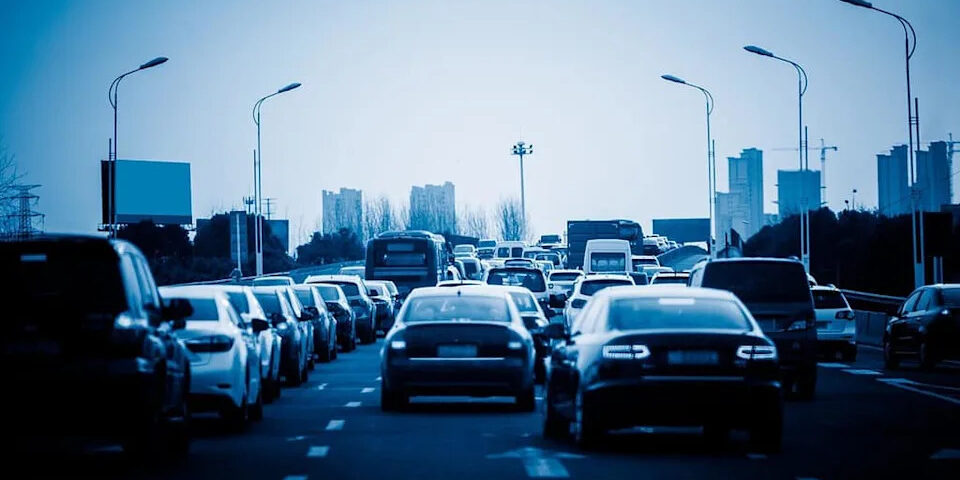
Animals get used to the continuous sound of traffic.
©ssguy/Shutterstock.com
(ssguy/Shutterstock.com)
Animals respond in many different ways to sound. Some show short-term behavioral changes, others experience temporary (TTS) or permanent (PTS) threshold shifts, and in some cases, animals have even died.
Research suggests that animals find it easier to adapt to continuous sounds. They may initially react, but those responses often diminish over time as the animal gets used to the sound and eventually tolerates it. This is called habituation.
Animal Responses to Impulsive Sounds
Animal reactions to high-intensity, irregular sounds are different. Here, the sound reaches peak intensity almost as soon as it starts. They trigger an acoustic startle reflex (ASR). If a firework has ever made you jump, you’ll know how this feels. Startle reflexes are meant to prepare an animal for a stress response. Its body undergoes both physiological and behavioral changes as it prepares to deal with a threat.
Advertisement
Advertisement
Research has also shown that repeated exposure to this type of sound can lead to behavioral sensitization in animals.
How Do Animals Respond to Fireworks?
Fireworks, by their very nature, are designed to produce unpredictable, high-intensity, and intermittent sounds. This is why they are so thrilling for many people. However, there is clear research that they trigger a fear response in animals, including dogs and horses. Both of these animals experience elevated stress when exposed to fireworks.
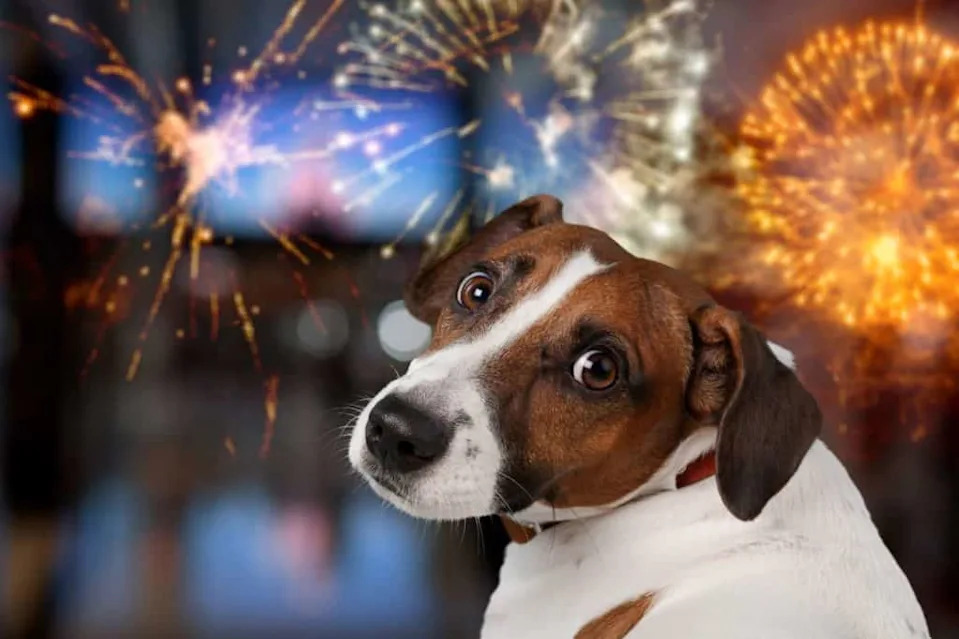
Dogs and horses can become stressed by fireworks.
©Billion Photos/Shutterstock.com
(Billion Photos/Shutterstock.com)
Many dog owners will have seen their pets trembling, panting, and vocalizing. Some dogs recover in just a few hours, but others can take days. The effects can last even longer. Some dogs become sensitized and have exaggerated fear responses to sounds for the rest of their lives. Studies of equine responses to fireworks have recorded increased blood cortisol (a stress hormone) levels, running around, sweating, trembling, and diarrhea.
Investigating Whether Fireworks Affect Wild Animal Species
Scientists from Stellenbosch University and the University of Cape Town in South Africa planned a study to assess the effect of fireworks on wild animals. It was based at the Victoria and Alfred Waterfront in Cape Town and took place during the New Year fireworks display on 31 December 2023. The study examined the short-term impacts of the firework display on marine wildlife.
Advertisement
Advertisement
Both animals exposed to in-air sound and those exposed to firework sounds transmitted into the underwater marine environment were assessed. This is because sound generated in the air can be transmitted underwater. However, the degree to which this occurs is governed by the sound frequency, source levels, and the angle of the sound source relative to the water’s surface.
Measuring Animal Responses to Fireworks
Animal responses were recorded using both video and audio data collected from 31 December 2023 to 1 January 2024. In-air microphones were used to measure both the sounds emitted by the fireworks and the vocalizations (calling sounds) of Cape fur seals, Cape cormorants, and Hartlaub’s gulls. Hydrophones were used to record underwater sound. Additionally, cameras were used to record seal behavior.
Did the Fireworks Change Animal Behavior?
The study area is busy year-round, with numerous sound sources such as boat traffic and live music. As a result, the animals living there are already accustomed to man-made sounds. Both species vocalized more, which has previously been identified as a stress response.
Seals showed an acute, short-term response: they shifted from sleeping to increased vigilance and locomotion during the fireworks, and increased vocalizing soon after the fireworks had stopped. In gulls, there was an increase in vocal behavior after the fireworks had stopped, likely because they were trying to maintain contact with each other.
©Alessandro De Maddalena/Shutterstock.com
” loading=”lazy” width=”960″ height=”640″ decoding=”async” data-nimg=”1″ class=”rounded-lg” src=”https://s.yimg.com/ny/api/res/1.2/Nx.NPBZwUS.moZKI9gT19w–/YXBwaWQ9aGlnaGxhbmRlcjt3PTk2MDtoPTY0MDtjZj13ZWJw/https://media.zenfs.com/en/a_z_animals_articles_598/65053a636bbb3c22ee13ca55762f852c”>
Seals can detect firework sounds under the water.
©Alessandro De Maddalena/Shutterstock.com
(Alessandro De Maddalena/Shutterstock.com)
Importantly, fireworks have a frequency range of 50 Hz–4 kHz, which overlaps with that of calls made by both Hartlaub’s gulls and Cape fur seals. This means that firework sounds are likely perceived as intense by them. Fleeing behavior has been recorded in seals and birds in response to fireworks. This expends energy and, in the case of birds, can lead to egg damage and nest abandonment. The cost is most serious for sensitive and endangered birds.
Advertisement
Advertisement
The study also demonstrated that firework sounds can propagate into the ocean. Importantly, many species living near the Victoria and Alfred Waterfront are protected. The behavioral responses they exhibited could be considered harassment as defined by several current laws. Therefore, the researchers concluded that further studies are needed to inform future decisions regarding the use of fireworks.
The post Fireworks vs. Wildlife: Seals Became Vigilant, Gulls Got Louder After the Blast appeared first on A-Z Animals.