This post was originally published on here
In the Texas border city of Edinburg, scientists are getting ready to release millions of invasive, flesh-eating flies into the wild. While the thought of the U.S. government releasing parasitic flies into the wild resembles a horror movie plot, they’re doing it to help protect people.
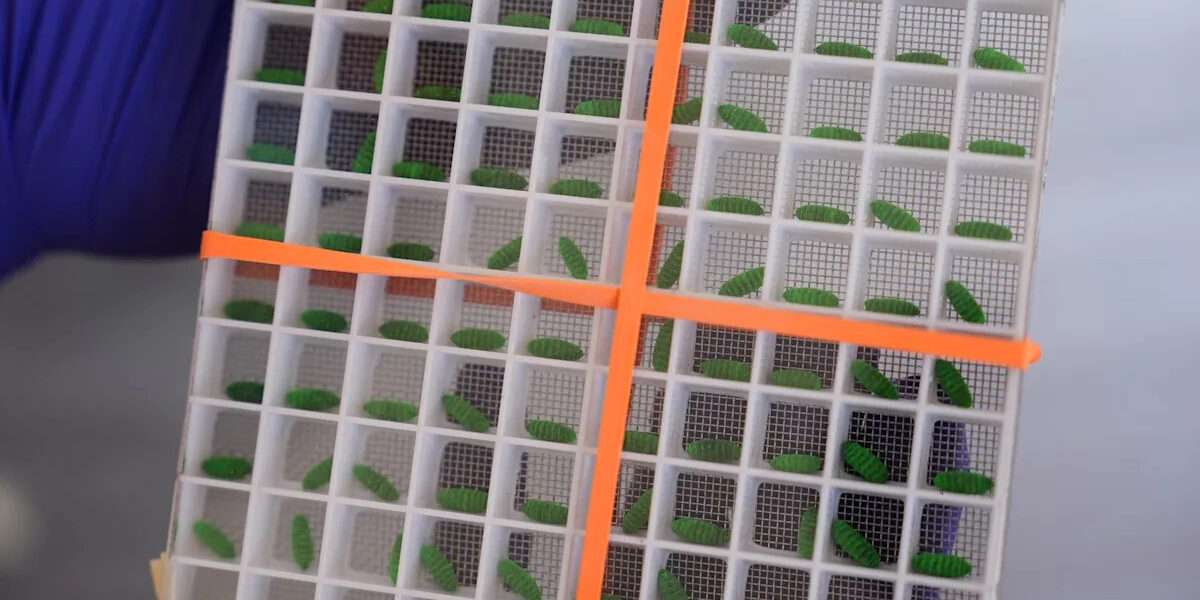
The U.S. Department of Agriculture unveiled a new facility at an old Air Force base near Edinburg that will disperse sterile screwworm flies into the community. The flies initially released are from Panama, but agriculture officials say a nearby facility still under construction will begin breeding their own sterile flies.
The flies themselves are not harmful. As larvae, they are highly destructive.
Advertisement
Advertisement
The larvae infest open wounds on animals, like livestock and pets, and can kill the animal within 10 days if left untreated. These pests can be devastating to the cattle industry, which has already faced shortages, contributing to rising beef prices.
Why are scientists breeding screwworms?
Unbiased. Straight Facts.TM
Scientists aren’t just breeding normal screwworm flies; they’re breeding sterile male flies, which they then release into the wild. The technique, creatively called the sterile insect technique, has these males mate with female screwworm flies, preventing the females from producing offspring.
Screwworms, like the housefly, only mate once in their about two-week adult stage. Female screwworm flies store the sperm of their one partner for the rest of their life, producing up to 3,000 offspring.
Advertisement
Advertisement
But male screwworm flies aren’t as monogamous as the females, mating multiple times. This key characteristic of the fly’s lifecycle is a major component of the scientists’ plan. Just a single sterile male fly couple prevents tens of thousands of new screwworm flies from being born in just a single generation.
Scientists typically sterilize the males using gamma or X-ray radiation. The radiation makes them sterile but doesn’t reduce the flies’ drive to compete for a mate.
While scientists could just spray pesticides to try to kill screwworm flies, that could harm other important insects and damage the ecosystem. The technique these scientists use has minimal environmental impact.
Have scientists done this before?
Scientists first employed the sterile insect technique in the 1950s to eradicate screwworms in the Southeast. The results were among the most significant entomological advancements of the modern era.
Advertisement
Advertisement
Since its first success, pest controllers have used the technique several more times. Scientists have also used the technique on other insects, such as the tsetse fly and certain agricultural moths.
The U.S. has largely eradicated the screwworm through this pest control method. Officials had actually shut down all of America’s fly facilities, with the only facility in the Western Hemisphere located in Panama. That facility only produces about 117 million flies a week. The new Texas facility will be able to produce 300 million per week.
“It’s a real testament to the all hands on deck – federal state and local – the fact that we do not have the pest in our country yet,” Agriculture Secretary Brooke Rollins told The Associated Press.
The post Why Texas scientists are breeding flesh-eating maggots appeared first on Straight Arrow News.