This post was originally published on here
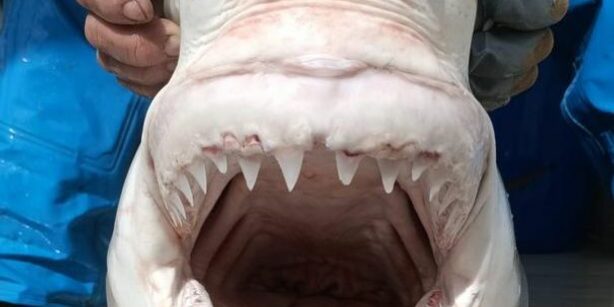
Scientists believe great white sharks may be breeding in the Mediterranean again, after a juvenile was found by fishermen off the Eastern coast of Spain. The shark, measuring about 210cm and weighing between 80kg and 90kg, was incidentally captured.
The encounter led scientists to review historical records dating from 1862 to 2023, the findings of which have now been published in the open-access journal Acta Ichthyologica et Piscatoria. The species was previously thought to have disappeared from the Mediterranean other than individuals from other seas roaming there.
The review suggests that while the Mediterranean great white shark remains a so-called “ghost” population, it has not disappeared from the region. The species is currently listed as Vulnerable on the IUCN Red List, with numbers continuing to decline.
“Determining the presence of juvenile individuals is of particular importance,” says Dr José Carlos Báez, the study’s lead researcher. “The occurrence of juvenile specimens raises the question whether active reproduction may be occurring in the region.”
However, researchers say sightings remain exceptional events, underlining the species’ rarity in the region. Scientists involved in the study stress that long-term monitoring programmes are essential to understanding the biology of great white sharks in the Mediterranean. They say combining occasional sightings with modern tracking techniques could help develop effective conservation strategies for the apex predator.
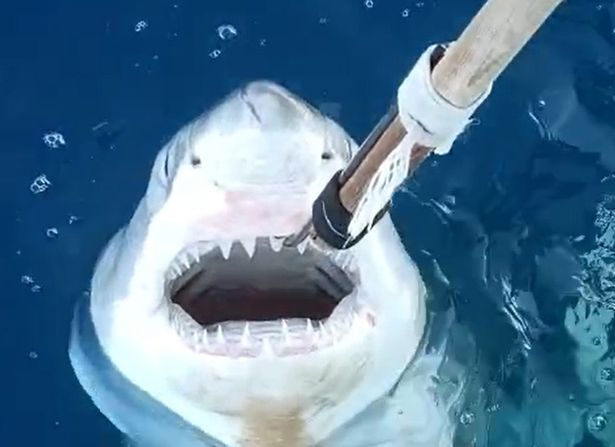
“The main idea I want to convey to the public is that these large marine animals have a fundamental role in marine ecosystems,” Dr Báez concludes. “As highly migratory pelagic species, they redistribute energy and nutrients across vast distances. They serve as nature’s scavengers – by consuming carrion, they keep ecosystems clean. Even in death, their descent to the seafloor provides a critical pulse of nourishment for deep-sea communities.”