This post was originally published on here
Scientists may have found a cure for selfishness – at least a temporary one.
In an experiment that used electrical currents to stimulate two parts of the brain, researchers were able to make people more likely to share their money.
They say the findings suggest that being selfless is hardwired in our brains to make us take care of others, and “set the stage for future research on cooperation”.
In the new study carried out at the University of Zurich, 44 participants were asked to split an amount of money between themselves and an anonymous partner.
They had just a few seconds to pick between the two options, choosing whether to take the larger sum for themselves or give more to their partner.
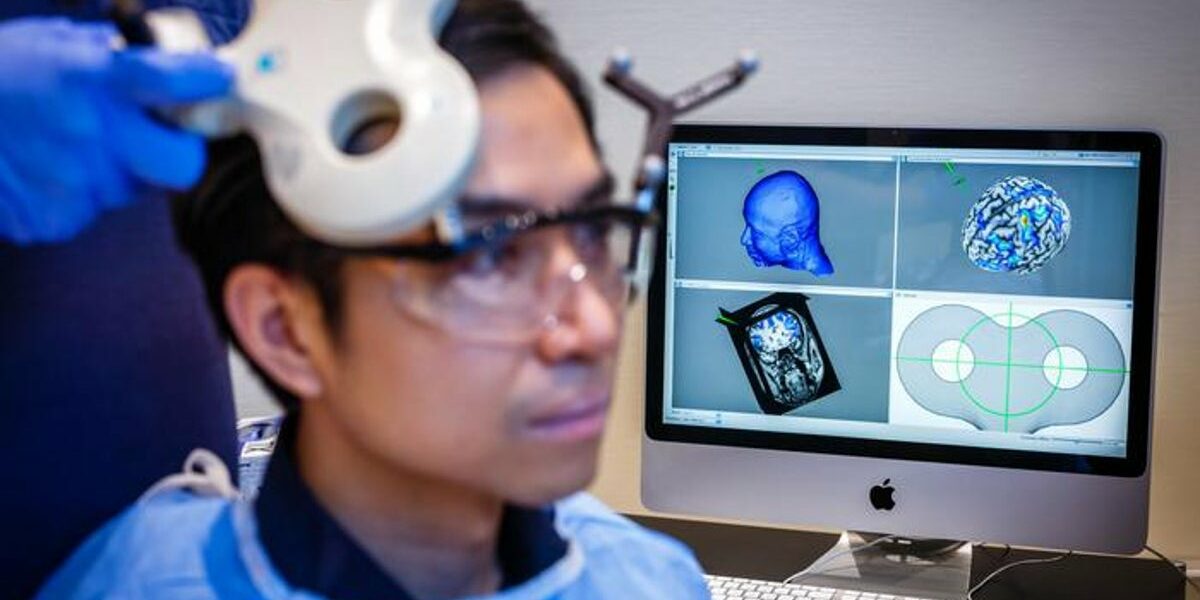
As people made this decision, researchers stimulated their brains using electrical currents over the frontal lobe, the decision-making part of the brain, and parietal lobe of the brain – vital for taste, hearing, sight, touch, and smell.
The stimulation was set up to make the brain cells in those areas fire in particular patterns, at a “gamma” frequency of between 40 and 90Hz or an “alpha” frequency of between 8 and 12Hz.
When the higher frequency was applied, the participants were “more likely to make an altruistic choice and offer more money to someone else”. That is even if they made less money overall, study authors explained.
“When we altered communication in a specific brain network using targeted, non-invasive stimulation, people’s sharing decisions changed in a consistent way – shifting how they balanced their own interests against others’,” co- author Jie Hu, from East China Normal University, said.
During the study, published in the journal PLOS Biology, researchers showed that the stimulation nudged the participants’ unselfish preferences, making them consider their partner more when they weighed each monetary offer.
Christian Ruff, a co-author of the study from Zurich, said: “We identified a pattern of communication between brain regions that is tied to altruistic choices. This improves our basic understanding of how the brain supports social decisions, and it sets the stage for future research on cooperation – especially in situations where success depends on people working together.”
Although in the case of this experiment the effects on selfishness were short-lived, the paper suggested that the research could be used for “developing intervention tools to improve individuals’ social function” for those with certain psychiatric conditions.
Speaking on BBC Radio 4’s Inside Science, Professor Ruff explained that to make the effects work in the long-term, the brain stimulation would need to be done repeatedly.
Comparing the potential effects to going to the gym, he explained one workout will not improve your fitness, “but if you go to the gym twice weekly for a period of two months, your body changes. This is the same.”