This post was originally published on here
Key Points
-
Global hunger affects hundreds of millions of people, and plant health is emerging as a key factor in improving food security.
-
Israeli researchers have developed SafeWax, a plant-based coating that mimics the natural waxy layer of plants to protect crops from disease, UV damage, and dehydration.
-
Tests on tomatoes, peppers, grapevines, and bamboo showed that SafeWax can cut pesticide use by at least 50% while maintaining normal photosynthesis and plant growth.
Put bluntly, we simply do not do the best job of feeding all 8.3 billion people on Earth. As the World Food Program explains, 318 million people worldwide are facing “acute hunger” due to conflicts, economic conditions, and, particularly, the climate crisis.
According to the United Nations, plant health could be part of the solution to this issue. However, the UN also noted that plant disease is making it harder for us to maintain crops, with about 40% of the planet’s agricultural yield dying off before it ever reaches our plates. While pesticides have helped reduce pest populations, they have also introduced a range of issues, including potential alterations to the human immune system. But researchers from Israel report that they may have a simple solution that helps plants and reduces our dependence on pesticides.
Advertisement
Advertisement
In September, researchers published their findings in the journal Small, demonstrating that their product, SafeWax, may offer a more environmentally friendly way to protect crops. According to a release from the Israel Institute of Technology, the inspiration for SafeWax is actually plants themselves, specifically the “cuticle,” or the “natural waxy layer that covers plants such as lotus leaves and broccoli, enabling them to self-clean by repelling bacteria and other contaminants.”
The team wanted to enhance Mother Nature’s own technology. In their lab work, they rebuilt a plant’s waxy shield from scratch using other plant-based ingredients. They started with naturally occurring fatty acids, the same types already found in plant waxes, and dissolved them into a liquid that could then be sprayed evenly onto leaves.
Related: Avoid These 12 Fruits and Vegetables If You’re Worried About Pesticides
The cool part is that once the spray is applied, the liquid dries, leaving only the fatty acids, which form a thin, invisible shield for the plant. The waxy layer then causes water to bead off, washing away any fungal spores and dirt, protecting the leaves. What’s perhaps even cooler is that the coating also acts like a sunscreen, protecting the plant from UV exposure and slowing dehydration.
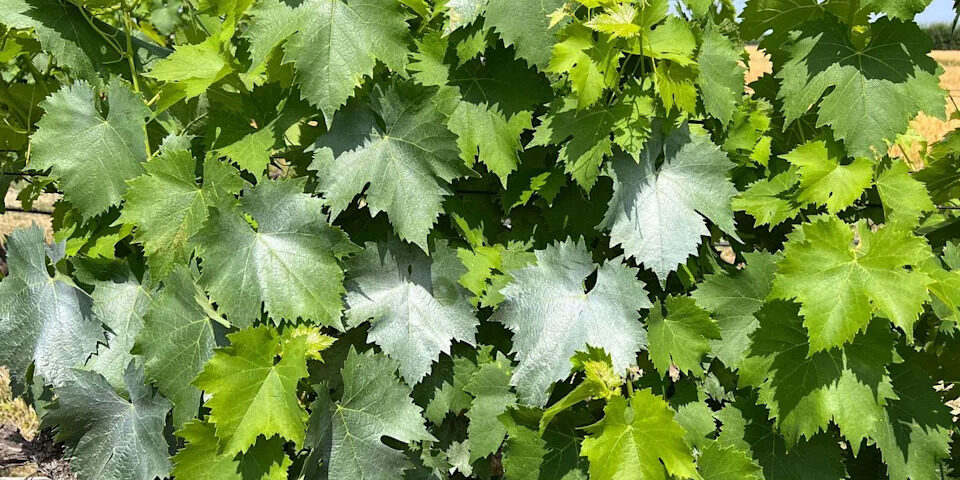
Courtesy of The SafeWax Team
The researchers tested the product on a variety of fruits and vegetables, including tomatoes, peppers, grapevines, and bamboo. Their tests showed it was effective at protecting these plants without blocking their natural photosynthesis (the process that allows plants to convert sunlight into energy, as you may remember from middle school science).
Advertisement
Advertisement
As for the magnitude of this product effect, the researchers estimated that it could reduce the use of chemical pesticides by at least 50%.
“This is an ecological, efficient, and multifunctional alternative for crop protection, especially in view of challenges that climate change poses to modern agriculture,” Boaz Pokroy, the coordinating professor of the study, shared. “Beyond providing passive defense against diseases, it enhances the environmental resilience of plants and reduces the ecological footprint of crop cultivation.”
How SafeWax works — in 4 steps
Rather than targeting pests with chemicals, SafeWax focuses on strengthening plants’ own natural defenses. It is a spray-on coating designed to mimic — and enhance — the waxy shield plants already produce. Here’s how it works:
1. Inspired by nature: Plants naturally have a waxy outer layer, known as the cuticle, that helps repel water, bacteria, and contaminants.
Advertisement
Advertisement
2. Sprayed on as a liquid: Researchers dissolve plant-based fatty acids — the same types found in natural plant waxes — into a sprayable solution.
3. Dries into an invisible shield: Once applied, the liquid evaporates, leaving behind a thin, transparent wax coating on the leaf’s surface.
4. Water beads and rolls off: The coating causes water to bead up and slide away, helping wash off fungal spores and dirt while also shielding the plant from excess UV exposure.
Read the original article on Food & Wine