This post was originally published on here
Every year, on February 11, the world celebrates the United Nations International Day of Women and Girls in Science.
While this date is now a global fixture, its origins have a significant Maltese connection. In 2015, working alongside the Royal Academy of Science International Trust and on Malta’s behalf, I steered the process leading to Resolution 70/212.
The resolution was adopted unanimously, formally proclaiming February 11 as an annual day to recognise that gender equality in science and technology is a prerequisite for sustainable development and innovation and, thus, to promote the participation of women and girls in science, technology, engineering and mathematics (STEM).
Today, Malta isn’t just celebrating the day it helped create; it is at the forefront in making its vision a reality.
A decade after that resolution, Malta is emerging as a success story in this area in the European Union. While some member states still struggle to attract girls towards digital pathways, Malta’s results show what is possible when policy and opportunity align.
Data published in 2025 shows that 23.3% of Maltese girls aged between 16 and 19 had written code in the previous three months, a figure that dwarfs the EU average of 9.9%.
When nearly one in four Maltese girls aged 16 to 19 are writing code this is not just a statistic, it points to a generational shift in which girls are no longer positioned on the margins of the digital economy but at its creative core.
These young women are learning not just how to navigate technology but how to design, question and build it. It is a signal of a changing landscape where girls are increasingly becoming the creators, not just the consumers, of our digital world.
Despite this local progress, the global picture remains challenging. Women are still significantly underrepresented in STEM, particularly in artificial intelligence (AI). Currently, women make up only about 30% of the AI workforce worldwide.
This imbalance matters deeply. AI systems now shape decisions in everything from healthcare to finance. When these systems are designed by a narrow demographic, they risk embedding structural biases. Ensuring that women are active participants in tech design is essential for accountability and fair democratic societies.
The inequality becomes even clearer when comparing different sectors of the economy. While women are underrepresented in high-growth digital fields, they are overwhelmingly concentrated in the care economy. Across Europe, 90% of long-term care workers are women.
Women make up only about 30% of the AI workforce worldwide– Helena Dalli
This also creates a structural divide that fuels one of the features of the gender pay and pensions gap. A split whereby high-pay, future-oriented sectors like AI remain male-dominated and low-pay, socially indispensable sectors like care remain female-dominated.
When we encourage girls to master STEM, we are working to break this cycle, distributing talent and economic power more equitably across the workforce to ensure women are not just working more but earning fairly for the value they create.
Malta is striving for good results by means of several key digital measures, providing a good foundation for these aspiring young scientists: – leading the EU in youth digital skills: 96% of 16- to 24-year-olds have digital skills, significantly higher than the EU average of 70%; – an above-average uptake of AI technologies by enterprises.
According to EU data, 17.3% of Maltese enterprises specifically reported using AI technologies; this is above the EU average and shows Malta’s relatively good position in AI uptake; – strong digital connectivity and top-tier e-government services.
In the European Commission’s eGovernment Benchmark 2025, Malta achieved a perfect score of 100 in both digital public services for citizens and for businesses, placing it first among all EU member states. This clearly surpasses the EU averages (82 for citizen services and 86 for business services).
To maintain this momentum, specific structural challenges are being addressed, such as further expanding the ICT workforce, encouraging deeper AI use among small and medium enterprises and improving the long-term gender balance within tech professions. These areas remain the focus of ongoing policy efforts across government, education and industry.
On this International Day of Women and Girls in Science, Malta’s example serves as both a reminder and an invitation.
It reinforces a truth long recognised by equality advocates: ability has never been the barrier; opportunity, visibility and encouragement have. When equality is embedded in national policy and classroom ambition, societies do not just become fairer, they become smarter, stronger and better prepared.
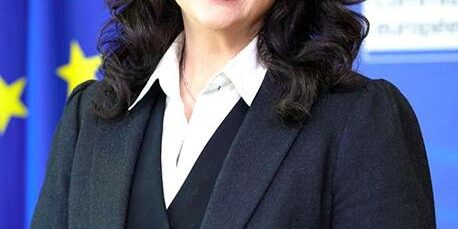
Helena Dalli is a former European Commissioner and Labour cabinet minister.