
Judge Throws Out Another Confession in Sept. 11 Case
Prosecutors have long considered the defendants’ admissions during interrogations in 2007 to be their best evidence.



Prosecutors have long considered the defendants’ admissions during interrogations in 2007 to be their best evidence.

This Chronicle Review Deep Cut was first published in 2025.
By Julianne Werlin
Thanks for reading The Chronicle Review! Subscribe for free to receive new posts and support my work.
Subscribe
The last two decades have not been kind to science studies. Already bruised and battered by the “science wars” of the 1990s, by the 2000s sociologists of science — who had long argued that science had to be understood in its human context — were encountering the funhouse-mirror version of their own views in right-wing critiques of climate scientists. It was enough to give some prominent scholars pause. “Was I wrong to participate in the invention of this field known as science studies?” asked Bruno Latour, the most famous sociologist of science in the world, in 2003. “Should we apologize for having been wrong all along? Or should we rather bring the sword of criticism to criticism itself and do a bit of soul-searching here: What were we really after when we were so intent on showing the social construction of scientific facts?”
In response, Latour proposed a change of method and attitude. Science studies, now chastened and contrite, would no longer seek to strip facts of their authority, but to enrich and enhance them. What this meant in practice was never fully clear. But his diagnosis of problems resonated, even if his solutions did not. Latour’s exercise in public hand-wringing signaled a shift in mood. By 2016, with the first election of Donald Trump, the idea that skepticism of science was a right-wing position, not a left-wing one, had become a commonplace, discussed eagerly in The New York Times. For liberals, vaccine denial during the Covid era and Trump’s second-term attacks on the funding of scientific research, covered extensively in these pages, added a new urgency to the defense of science on both practical and principled grounds. There was little appetite for a sociology or philosophy of science that emphasized the messiness and missteps of the scientific process rather than its integrity and triumphs.
The distinguished historian of science Peter Dear’s new book, The World as We Know It: From Natural Philosophy to Modern Science (Princeton University Press, 2025), which seeks to tell the story of 18th- and 19th-century science for a general public, may seem comfortably remote from these bitter contests. In its 16 short chapters, Dear draws swift, sure sketches of major discoveries from Newton to Einstein, ably guiding the reader through debates on stellar nebulae, animal taxonomy, atomic chemistry, evolution, and other flashpoints in the history of science. But though a work of history, Dear’s book must still negotiate our polarized present. In a blurb on its back cover, the historian of biology Lynn K. Nyhart alludes to the “present moment, when scientific knowledge is being swamped by misinformation and its institutions are under siege.” Dear himself, in his conclusion, refers to the “yard signs” and “bumper stickers” that proclaim “Science Is Real.” One antidote to both anti-science propaganda and to reductive slogans in science’s defense is a robust history and philosophy of science: exactly what Dear’s scholarship has long offered. But his new book illustrates how difficult such work has become.
Dear, an emeritus professor of history at Cornell University, is best known as a creative and philosophically minded historian of the Scientific Revolution. His edited volume The Literary Structure of Scientific Argument (1991) analyzed the rhetoric of Galileo’s thought experiments to brilliant effect. Discipline and Experience: The Mathematical Way in the Scientific Revolution (1995) was a major contribution to the analysis of scientific experiments in early modern Europe and beyond, while Revolutionizing the Sciences: European Knowledge in Transition, 1500-1700 (2001), now in its third edition, remains one of the best overviews of the profound epistemological upheavals of 16th- and 17th-century science.
But Dear has also ventured into later periods. Nearly two decades ago, in The Intelligibility of Nature: How Science Makes Sense of the World (2006), he turned to the 18th and 19th centuries to sketch a history and theory of scientific knowledge. Aimed at a generalist audience, Dear’s simple prose belied serious philosophical ambitions. Science, Dear argued, has two aspects: “natural philosophy,” the quest to understand the true nature of the universe, and “instrumentality,” the applied skills and technologies that allow us to manipulate the world for human advantage. Both strands are ancient, but the innovation of the phenomenon we call “science” was to yoke them together. As Francis Bacon wrote, “Human knowledge and human power meet in one; for where the cause is not known, the effect cannot be produced,” an insight typically abridged to “knowledge is power.” Or, in Bertrand Russell’s characteristically blunt phrase, science has two functions, “1. to enable us to know things, and 2., to enable us to do things.”
So far, so conventional. But Dear took issue with this familiar story in one respect. Bacon’s formula implied that theory and practice could be fused in a single method. In fact, Dear argued, the quest to understand nature and the desire to manipulate it were coupled only loosely. They could come together, but they could also pull apart. Focusing on natural philosophy, the “knowing” half of the scientific circle, he used a series of case studies from cosmology, taxonomy, chemistry, electromagnetism, and quantum theory to show how theories changed over time, in dialogue with practice, but never reducible to it.
Take the case of matter, the basic substrate of the physical world. In the 18th and 19th centuries, scientists not only disagreed about what it was, but also about how well it could be known. In 1789, the chemist Antoine Lavoisier dismissed speculation about the atomic composition of chemicals as “discussions entirely of a metaphysical nature,” as he sought to orient chemistry away from philosophical abstraction and toward laboratory results. But in the 19th century, atoms returned with a vengeance in the atomic chemistry of John Dalton, who wanted to explain the underlying structure of nature. It was not just that Dalton and Lavoisier had a different set of experimental results, or even a different theory, Dear showed. What counted as an explanation had changed.
In arguing that scientific theories depended on their intelligibility to human beings with complex arrays of beliefs and commitments, Dear was in sympathy with science studies. Key figures such as the sociologist Steven Shapin emphasized the importance of psychological mechanisms like trust in the formation and acceptance of scientific ideas. But in focusing on the scientific pursuit of knowledge, not its politics or economics, Dear resisted the more cynical perspective of some of his colleagues. The Intelligibility of Nature strikes a very different note than Shapin’s collection of a few years later, Never Pure: Historical Studies of Science as If It Was Produced by People With Bodies, Situated in Time, Space, Culture, and Society, and Struggling for Credibility and Authority (2010), to name just one example. Walking a very fine line, Dear depicted science as driven at once by complex social dynamics and by the intellectual power of real discoveries. It was a testament not only to his own acumen but also to the vitality of the field that he was able to do so.
Nearly two decades later, The World as We Know It returns to the questions broached in The Intelligibility of Nature. Like Dear’s earlier study, it begins with the Newtonian cosmos and ends with debates between Einstein and Bohr on quantum physics. Beyond its terminal figures, many of the same characters appear in both studies, including the naturalists John Ray and the Comte de Buffon; the chemists Étienne François Geoffroy, Antoine Lavoisier, and John Dalton; as well as Charles Darwin and Michael Faraday, among others. Its subject is nearly identical: As in The Intelligibility of Nature, The World as We Know It considers natural philosophy as opposed to instrumentality, here defined as the “desire to create a picture of what the world is really like — the world as God knows it — rather than simply having instrumental or operational control over it.”
The two books also overlap in insights — and sometimes even in language. The reader who has learned in The Intelligibility of Nature that Buffon’s method of classifying animals “reflected his belief in the importance of the senses and empiricism in learning about nature (a doctrine associated with Newton and the philosopher John Locke)” will experience a sense of déjà vu on reading, in The World as We Know It, that the classification “reflects Buffon’s commitment to the epistemological stance of Newton and his philosophical underlaborer John Locke, who stressed the role of the senses in creating natural knowledge.” Later in the passage, we read that, “because of its stress on understanding the ways of life of animals in their environments, Buffon’s approach could almost be labeled (anachronistically) as ‘ecological.’” And again, “an anachronistic way of putting it would be to say that Buffon recommends an ecological mode of understanding.”
Likewise, in The Intelligibility of Nature we read of Dalton that he was initially drawn to meteorology, and that:
He did a bit of experimental work on these things, especially having to do with the water-holding capacity of gases, but his real interest lay in understanding what, at an underlying natural-philosophical level, was really going on physically.”
Whereas, in The World as We Know It:
He did experimental work on these things, especially concerning the water-holding capacity of gases — although not at a very refined level quantitatively — but he was continually trying to develop a theoretical conception of what was happening physically.
The final full chapter of each book closes on the same resigned note. Intelligibility:
These days, most serious work on the natural philosophical underpinnings and implications of quantum mechanics is performed not by physicists but by philosophers of science. Among scientific practitioners themselves, Bohr’s attempt to use instrumentality as sufficient grounds for a respectable science has met with a high degree of success.
And again, in The World as We Know It:
Bohr’s and Einstein’s concerns are now questions that are mostly discussed by philosophers of science rather than by physicists themselves. The marginalization of these sorts of questions amounts to the demise of natural philosophy, at least in physics, in the 20th century. Quantum mechanics “works,” and that’s good enough for most scientists who encounter it.
Examples could be multiplied. When handling the same subject matter, some echoes are inevitable. Scholars should not feel that because they have written “Isaac Newton died in 1727” in one book, in the next they must describe him as perishing, expiring, or meeting his maker. But the repetitions of language and arguments (not to mention six reproduced images) threaded throughout The World as We Know It are more extensive than that. They should have been caught by Princeton University Press or its reviewers, and revised.
Because the two books have so much in common, it is easy to see where they diverge. The World as We Know It is a less theoretical work than its predecessor. The sociology of knowledge that organized The Intelligibility of Nature has been reduced in scale and folded into readings and examples. The taut interplay between history and theory, which gave the earlier study so much interest, is there, but it is subtle. In the earlier book, the case studies demonstrated theoretical claims about the character and development of science. In the later work, each narrative of discovery is an end in itself. Insights emerge from the history, but they do not control the organization of the study.
With the theory muted, it can be hard to understand the logic uniting Dear’s sprawling history of more than two centuries of scientific knowledge. The 16 brisk chapters cover an enormous amount of material. But the closer the volume edges to comprehensiveness, the more obvious the missing elements become. A chapter on “Institutions and Pedagogy,” describing the birth of the research university, illustrates the problem. Inserted roughly halfway through the book, the unnumbered chapter is designed as an “entr’acte,” in acknowledgement that it does not fit the study’s organization around scientific discoveries. Yet as Dear is well aware, no general history of the development of modern science can bracket its 19th-century institutionalization and professionalization. It was the 19th-century university, after all, that gave us the “scientist,” a term coined by the Cambridge philosopher William Whewell. Dear’s history of scientific discoveries implies a wider social and institutional history, but it remains largely subterranean, only occasionally extruded under the pressure of the narrative.
It must be said that the balance is not all on the side of the earlier study. There are some advantages to the more historical, less theoretical organization of The World as We Know It. Dear’s accounts of paradigm shifts are remarkably lucid, no small accomplishment given that they span fields and centuries. He makes excellent use of the wealth of new scholarship on Darwin and his influences, to which he has himself contributed. It is satisfying to see puzzle pieces from Buffon’s natural history, Georges Cuvier’s animal taxonomy, Thomas Robert Malthus’s demography, and Charles Lyell’s geology recombined seamlessly in the Darwinian jigsaw. Likewise, Dear’s discussion of stellar nebulae, divided between chapters two and 15, shows vividly how Newton, Kant, Herschel, and Hubble reimagined insights and observations as they sought to discover whether the diffuse light that filtered through early telescopes was a glowing, gaseous substance or discrete but distant stars.
Yet despite such pleasures, the book remains a more modest work than The Intelligibility of Nature. Dear has clearly not changed his views about the history of science. But in the two decades that have elapsed, the discipline and the world around it have changed, making it harder to write a sociologically and philosophically ambitious history of science for the general reader. That is a shame, because in the age of Silicon Valley and biotechnology, both the reciprocity and the tensions Dear identified between the epistemological and instrumental ambitions of science are more evident than ever. In recent years, some of the most exciting new books on the history of science in early modernity have focused precisely on this pressure point. Important studies such as Pamela H. Smith’s From Lived Experience to the Written Word (2022), James Poskett’s Horizons: The Global Origins of Modern Science (2022), and Vera Keller’s The Interlopers: Early Stuart Projects and the Undisciplining of Knowledge (2023) all shed new light on how early modern science negotiated the relationship between its instrumental and epistemological ambitions, or in Russell’s phrase, knowing and doing. There is every opportunity for a philosophically informed approach to draw new insights from this wealth of material. Dear, unfortunately, has not done so in The World as We Know It. But for future scholars of the history of science, his body of work over nearly four decades may provide just the model.
Julianne Werlin is an associate professor of English at Duke University.
Thanks for reading The Chronicle Review! Subscribe for free to receive new posts and support my work.
Subscribe
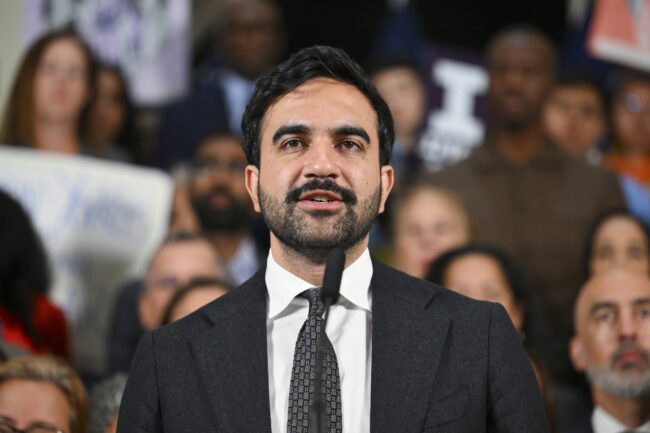
NYC Mayor Mamdani releases the city’s first antisemitism strategy with $29M in funding — but no formal definition and no mention of Israel.

‘Deeply loved and forever missed.’
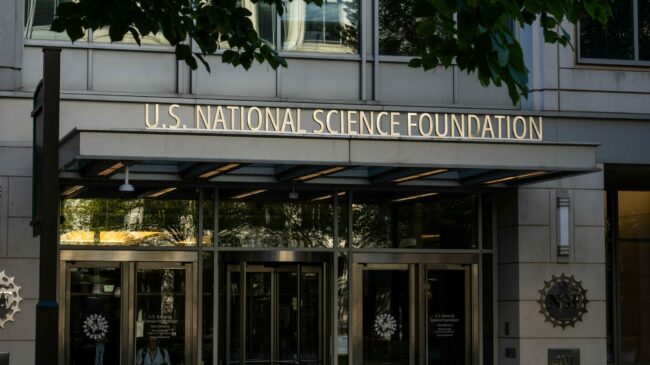
The move, affecting about one-fifth of the National Science Foundation’s primary research budget, is the latest sign of how the White House is asserting more control over grants.

California could create a multi-billion-dollar science and health research agency under a new bill signed by Gov. Gavin Newsom.

A Princeton researcher found that publicly available election records could be combined with AI to link voters to their ballots
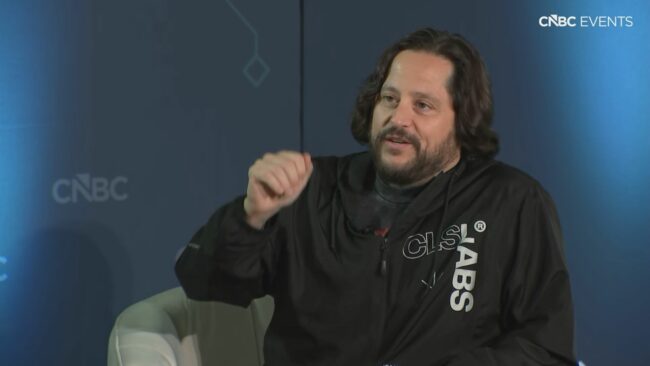
Ben Lamm, Colossal Biosciences Co-founder and CEO, told CNBC’s Julia Boorstin at the 2026 CNBC AI Forum about how AI helps make “magic” happen when it comes to de-extinction.

Also: Spooky action at the LHC, Ice Age psychoactive use, yeast for building homes on Mars, and more.

This post was originally published on here Riviera Beach police say surveillance video showed a man set two fires at a business after he had been warned to stay off the property.