This post was originally published on here
The choice between a Kindle and physical books can be tough, especially for traditional book lovers. The feeling of holding a book, turning pages, and even the smell of print is integral to the reading experience for many. That’s why they hesitate to switch to a Kindle. But as it turns out, not everyone who’s moved to a Kindle feels disappointed. On the contrary, many express satisfaction and have discovered that the convenience of a Kindle outweighs the emotional connection they felt with physical books.
Kindles are designed to solve some of the real-world problems we face with traditional books, without taking away the joy of reading. The display makes the experience feel book-like, and within its expansive library, you can browse through millions of titles. Apart from that, a Kindle is lightweight, allowing you to carry it anywhere. It has a wide array of built-in functions that complement your experience, from dictionaries to annotations. And since ebooks are often cheaper than their hardcover editions, you may end up saving money on purchases.
For some of you, it may not be about choosing one over the other, but simply what’s more convenient at any given moment. Perhaps, a paperback makes more sense while you’re resting comfortably on the couch, and for travel, a Kindle quietly takes the lead. So, if you’ve been thinking about getting a Kindle but aren’t sure yet, some of the benefits listed below might convince you.
Delivers a smooth, distraction-free reading experience
Tada Images/Shutterstock
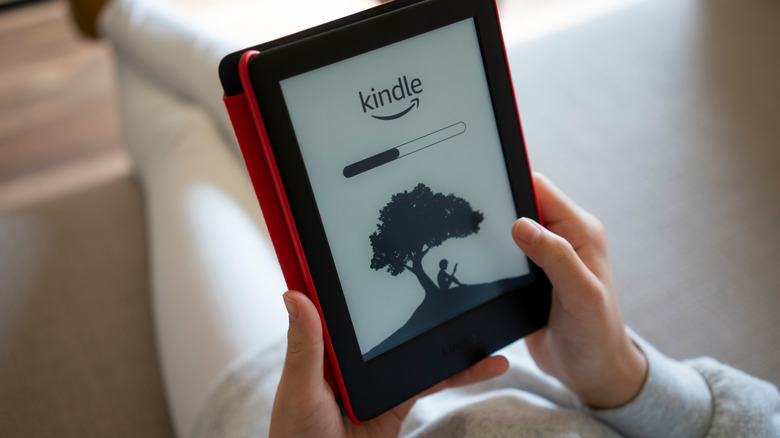
First up, and most important, is the reading experience. With Kindle, you get an e-ink display that mimics real paper. So, you’re not really compromising on the feeling. It’s still almost the same. This even makes Kindles lighter on the eyes, allowing you to read for longer without causing eye strain.
If you’re someone who reads for hours at a stretch, a Kindle would be a much better choice than tablets and smartphones. As for physical books, Kindles beat them in convenience, especially at night when you have to search for a lamp or light source. If it’s too bright, it might become uncomfortable, or if it’s too dim, you risk straining your eyes. With a Kindle, there’s no harsh glare and the display is perfectly lit at all times.
Kindle also offers a distraction-free experience. There are no notifications, and you can truly focus on reading. With options to adjust font size and configure spacing between characters, words, lines, and paragraphs, you can tailor the experience. That’s something you never get with books.
Lightweight and easy to carry

Imtmphoto/Getty Images
One of the biggest drawbacks of physical books is that they can sometimes be difficult to carry around, especially when you’re on the move. If it’s a long trip and you’re planning to carry a few books, it’ll take up space and add to the weight.
A paperback typically weighs 170-340g depending on the number of pages and paper quality. Hardcover books weigh even more. On the other hand, a Kindle is lightweight, weighing around 150-220g, depending on the model. Given its compact size, a Kindle fits perfectly even into smaller compartments. This is one of the reasons many switch to Kindle or Kindle alternatives, because it lets you carry your entire collection with you.
Apart from that, Kindles have a surprisingly good battery life. With decent use, it can easily last a few weeks on a single charge. Additionally, Kindle Paperwhite (10th Generation) and later are designed to be waterproof and have an IEC rating of IPX8. Keep in mind that Amazon strongly recommends against using Kindles underwater, but light exposure to water is unlikely to do any damage. This makes Kindles perfect for vacations, whether you’re on the beach or chilling by the pool. Those splashes that would ruin a perfectly good book have no effect on Kindles.
Stores thousands of books
Liudmila Chernetska/Getty Images
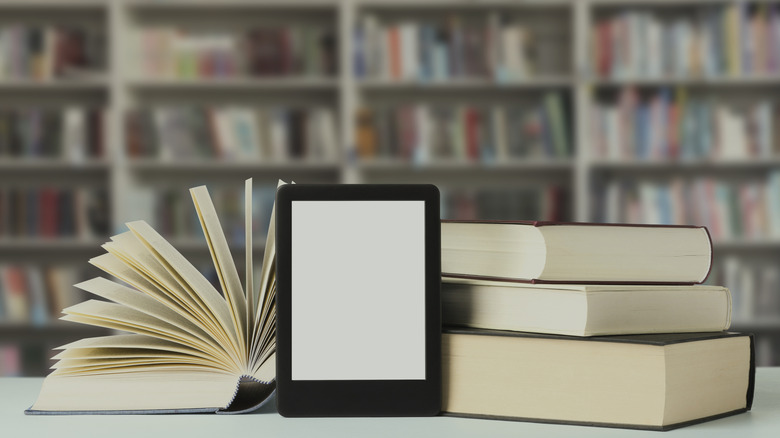
One of the biggest advantages Kindle offers is its ability to store thousands of books. A 4GB Kindle can hold 2000-2500 books, while a 16GB model can store around 10,000 books. That’s way more than any bookshelf could hold.
Whether you’re at home or traveling, having thousands of books just a tap away is certainly a delight. It’s even more convenient for people who have a habit of reading multiple books at a time. You can easily switch between them without having to carry each book physically.
This also solves another problem we often face: storage. Books take up space, and once your collection reaches a hundred or more books, managing them may become a challenge. Instead of buying multiple bookshelves, you could simply store them on your Kindle. And the moment you finish one, you can quickly move to the next without even getting up. There are certainly a few books worth keeping, especially collectibles, but for the rest, a Kindle makes way more sense.
Built-in dictionary, annotations, and more
Kittyfly/Shutterstock
Kindle comes packed with built-in features that streamline your reading experience. We often come across unfamiliar words while reading, and grabbing a dictionary or looking up the word on a smartphone tends to break the flow. With a Kindle, you can simply tap and hold the word for a few seconds, and the built-in dictionary will pop up and display its meaning, origin, and more. The English dictionary is added to Kindles by default, and you can download dictionaries for other languages from the library.
Another handy feature in Kindle is the ability to highlight and add notes to words, phrases, or paragraphs. Again, you simply need to tap and hold the first word and drag your finger to select the entire phrase. The Kindle then gives you the option to highlight the selection or add a note. You can quickly revisit the highlighted sections later.
This is extremely useful when you’re reading research papers or anything you may need to reference later. Other useful features on Kindle include X-Ray, collections, built-in browser, and capturing screenshots. There are also free apps to get more out of your Kindle worth considering.
Saves money in the long run
Joni Hanebutt/Shutterstock
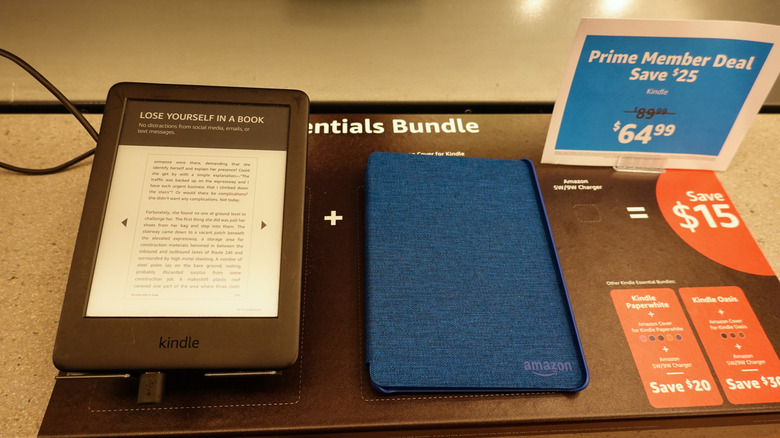
As surprising as it may sound, a Kindle sometimes turns out to be a money-saver, especially if you read a lot of books. E-books are generally more cost-effective than their physical counterparts, and in time, you recover the initial investment, the Kindle itself.
A Kindle Paperwhite 16GB costs around $159. Let’s take the average cost of a paperback as $15. E-books are typically 10-20% cheaper. So, the e-book version of the paperback would cost you around $12. This means you save roughly $3 on every book. On expensive books, the price difference may be higher, resulting in bigger savings. So, after 30-40 purchases, you’ll have theoretically recovered the cost of your Kindle. We haven’t yet even factored in the cost of bookshelves to store books, or trips to the bookstore. Those are all additional savings.
Keep in mind that there are also books that have a free Kindle version. Search for “free Kindle books” on Amazon, and you’ll find many, though the collection isn’t that great. Apart from that, Amazon Prime members get free access to a large number of books. If you subscribe to Kindle Unlimited, that opens up a lot more options, over five million digital books, according to Amazon, and it costs $11.99 a month. For those who read a lot, all these can deliver decent savings in the long run.